 Are you a Long-Term Trader? Then take a look at our NEW RoboInvestor Service?
CLICK HERE TO LEARN MORE
Wall Street is heading into November with its nerves rattled and little room for error. After last week’s brutal technology selloff wiped out billions in market value and raised fresh doubts about the AI boom, investors are now staring down a potentially explosive combination of midterm elections, heavyweight corporate earnings, and Friday’s critical jobs report.
SPY enters the week with the $740–$750 support zone in focus, and the stakes are rising: will buyers step in and reignite the bull market, or will another round of disappointing headlines trigger a deeper correction? I remain in the MARKET BULLISH camp, with a longer-term SPY target of $780–$810, but this week’s developments could determine whether November begins with a powerful rebound or another painful test of investor confidence.
Monday’s early rebound comes as investors digest encouraging signs of potential diplomatic progress involving Iran, sending oil prices sharply lower and easing some immediate inflation concerns. Meanwhile, October’s ISM Manufacturing Index rose to 55.5 from 54.5 in September, exceeding expectations and demonstrating continued economic expansion. Manufacturing input prices remain elevated, however, reinforcing the challenge facing the Federal Reserve. The combination of resilient economic activity, persistent inflation, and increasingly selective earnings reactions continues to define the current trading environment.
And if investors were hoping November would offer a quieter start, this week’s calendar suggests otherwise. Between Tuesday’s midterm elections, another wave of major technology earnings, and Friday’s October employment report, markets face several potential catalysts capable of changing expectations for stocks, interest rates, and the broader economy.
Last week began with renewed enthusiasm surrounding artificial intelligence. Monday’s public IPO filing from Anthropic helped revive interest in semiconductor companies and AI infrastructure, lifting the S&P 500 approximately 0.7%. Buying continued Tuesday as investors positioned themselves ahead of major earnings reports and Wednesday’s Federal Reserve decision.
The Fed ultimately held its benchmark interest rate unchanged at 3.75%–4.00%, with two policymakers favoring an increase. Chair Kevin Warsh emphasized the need to remain focused on inflation, leaving investors with the prospect of restrictive interest rates lasting longer than previously anticipated.
Thursday’s economic reports reinforced that challenge. Third-quarter GDP expanded at a stronger-than-expected 3.4% annualized pace, while September’s PCE inflation reading reached 3.6% annually, with core PCE at 3.1%. These numbers demonstrated that the economy continues growing, but inflation remains well above the Fed’s 2% target.
Corporate earnings soon overwhelmed the early optimism. Although Microsoft’s cloud performance demonstrated continued demand for AI infrastructure, disappointing reactions to Alphabet, Amazon, and Intel highlighted growing concerns about the enormous costs associated with the AI investment boom.
Friday delivered the week’s most painful session. Intel plunged nearly 29%, while weakness spread across semiconductor and technology stocks. The Nasdaq fell approximately 2.9%, and the S&P 500 dropped 1.8%. For the full week, the Nasdaq lost roughly 2%, while the S&P 500 declined 0.6%, marking a third consecutive weekly loss for both indexes.
The larger message is that Wall Street is no longer rewarding AI investment simply because companies are spending more. Investors want evidence that expanding data centers, infrastructure commitments, and capital expenditures will translate into sustainable revenue, improving margins, and meaningful free cash flow. That distinction could determine market leadership well beyond this earnings season.
The first major political event arrives Tuesday, November 3, with the U.S. midterm elections. Investors will be watching the balance of power in Congress and what the results could mean for fiscal policy, taxes, regulation, tariffs, healthcare, and energy. Political uncertainty can generate short-term volatility, particularly in sectors sensitive to potential legislative changes. However, markets will ultimately remain focused on economic growth, corporate profitability, and monetary policy.
Earnings could be equally consequential. Apple and Palantir report after Monday’s closing bell, providing important perspectives on consumer demand, enterprise technology spending, and the broader AI trade. Tuesday brings AMD, Super Micro Computer, Arista Networks, Shopify, and Pfizer. Semiconductor results will be particularly important following Friday’s weakness, as investors look for evidence that AI-related demand can support the industry’s increasingly ambitious growth expectations.
Wednesday adds another round of major reports, including Uber, McDonald’s, Qualcomm, Arm Holdings, and CVS Health. These companies will offer insights into consumer spending, technology demand, healthcare costs, and business investment. Airbnb and several energy and technology companies follow Thursday, while Moderna and energy-related companies help close the earnings calendar Friday.
The economic calendar is just as important, especially following last week’s strong GDP report and persistent inflation readings.
Tuesday’s September JOLTS report will provide an updated picture of job openings and labor demand. Wednesday brings the ADP private-sector employment report alongside the October ISM Services Index, a particularly important indicator given the dominant role of services in the U.S. economy.
Thursday’s preliminary third-quarter productivity and labor-cost data will offer another perspective on inflation pressures and the cost of maintaining economic growth.
The most important economic release arrives Friday, November 6, when the Bureau of Labor Statistics publishes October’s employment report at 7:30 a.m. Central. Investors will be evaluating payroll growth, the unemployment rate, wage increases, and revisions to prior months.
A stronger-than-expected jobs report could reinforce economic resilience while increasing concerns about additional Fed tightening. Conversely, a disappointing report could revive recession worries, even if it reduces pressure on interest rates. The ideal outcome for equities may be evidence of a labor market that is cooling gradually without signaling a sharp deterioration in economic conditions.
Beyond earnings and employment, oil prices remain a critical variable. Monday’s sharp decline follows indications that diplomatic discussions could reduce tensions involving Iran, although uncertainty surrounding the conflict and the Strait of Hormuz remains considerable.
Any sustained decline in energy prices could provide relief to consumers, transportation companies, and inflation-sensitive sectors. However, another escalation could quickly reverse that benefit and complicate the Federal Reserve’s outlook.
Treasury yields are another important consideration. The 10-year yield has recently retreated toward 4.9%, following a prolonged period of elevated borrowing costs. Lower yields could help support equity valuations, particularly among growth companies, but the reason yields are declining matters. A move driven by easing inflation is considerably more constructive than one driven by fears of economic deterioration.
I will also be watching whether leadership begins broadening beyond mega-cap technology. Financials, industrials, select consumer companies, and certain energy businesses could provide opportunities as investors reassess valuations and capital allocation. Within technology, the emphasis should increasingly shift toward companies demonstrating genuine profitability and sustainable returns from AI spending.
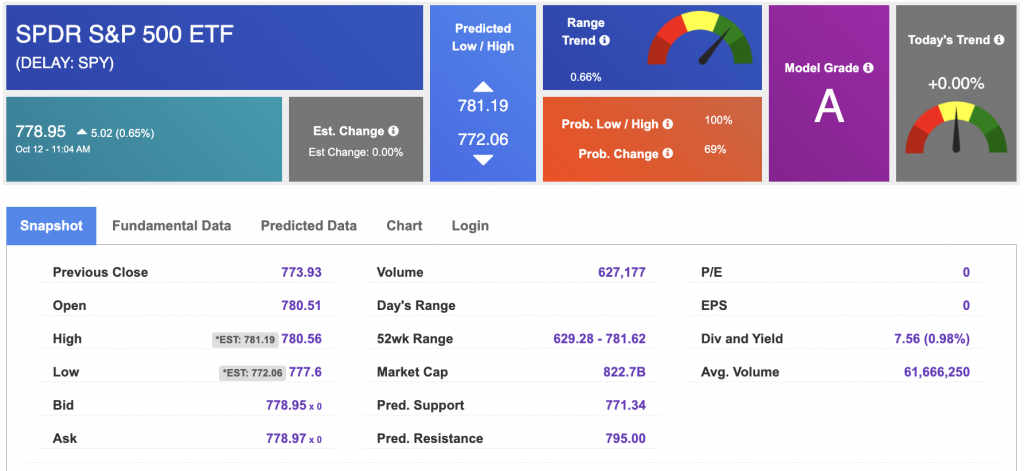
For SPY, the $740–$750 region remains the most important near-term support area. A sustained break below this zone would warrant additional caution and could lead to another round of selling. On the upside, reclaiming $765–$770 would be an encouraging first step, while a move above $780 would strengthen the case for a renewed advance toward our broader $780–$810 objective.
I continue to believe the underlying bull market can resume, supported by economic growth, corporate earnings, and continued investment in technology. However, the environment has become increasingly selective, and the market is placing a much greater premium on execution, earnings quality, and disciplined capital management.
This is not a market where I want to chase every rebound or automatically buy every technology dip. I would rather see confirmation through improving market breadth, stabilizing bond yields, constructive earnings reactions, and price action around important technical levels.
In our Tradespoon Live Trading Room, we’ll continue monitoring these developments, reviewing key support and resistance levels, and using our Stock Forecast Toolbox to identify opportunities where technical conditions and forecast signals align.
November begins with plenty of uncertainty, but uncertainty also creates opportunity. The key is distinguishing temporary volatility from meaningful changes in the market’s underlying direction.
I remain MARKET BULLISH, but this week patience, selectivity, and risk management will be every bit as important as getting the market direction right.
Please share this Tradespoon Market Commentary with your friends.



Comments Off on


Tradespoon Tools make finding winning trades in minute as easy as 1-2-3.
Our simple 3 step approach has resulted in an average return of almost 20% per trade!