 Sign Up for One-on-One Coaching and get our Premium Membership FREE for 1 Year!
CLICK HERE TO APPLY
RoboStreet – Record earnings, surging oil prices, and rising Treasury yields are setting up a critical test for Wall Street. Can the bull market overcome mounting economic and geopolitical pressure? We break down the biggest market drivers, emerging opportunities, and why our bullish outlook remains intact.
Wall Street is entering earnings season with a familiar problem: corporate profits continue to grow at an impressive pace, but the bond market is making it increasingly expensive for investors to justify higher stock prices. Just when softer employment numbers appeared to offer the Federal Reserve an opportunity to pause its tightening campaign, Treasury yields surged toward their highest levels in nearly a quarter-century, oil rebounded above $100 per barrel, and geopolitical tensions once again complicated the inflation outlook.
And remember, we’re not talking about day trading here. I’m looking for 50-100% gains within the next 3 months, so my weekly updates are timely enough for you to act.
Wall Street is caught between surging corporate earnings and mounting pressure from Treasury yields, oil prices, and geopolitical uncertainty. With the 10-year yield near 24-year highs, Brent crude above $100, and the Fed facing a difficult inflation outlook, can record earnings keep the bull market moving? We examine the week’s biggest market drivers, emerging AI infrastructure opportunities, and why our bullish SPY outlook remains intact, with upside targets of $780–$810.
Despite these challenges, the S&P 500 and Nasdaq managed to reach fresh record highs earlier this week, demonstrating that investors remain willing to look beyond near-term economic uncertainty. The artificial intelligence investment cycle continues to support technology spending, corporate earnings expectations remain exceptionally strong, and the labor market has shown signs of moderating without experiencing the widespread layoffs normally associated with a recession.
The question facing investors is whether earnings growth can continue to outweigh the pressure from elevated interest rates, higher energy prices, and increasingly expensive valuations. I remain in the bullish camp and believe the long-term market uptrend is intact, but the next several months may require greater patience and selectivity as investors navigate competing economic signals.
Last Friday’s September employment report initially appeared to provide some welcome relief for investors. The U.S. economy added just 29,000 jobs, while unemployment rose to 4.2%, reinforcing expectations that a cooling labor market might allow the Federal Reserve to pause additional rate increases. Equities responded positively as investors reduced their expectations for another October hike, but the enthusiasm proved short-lived when Treasury yields resumed their advance.
The 10-year Treasury yield, which finished last week near 5.28%, climbed toward 5.35%–5.37% on Wednesday, reaching levels not seen since 2002. The 30-year yield also approached a 24-year high, extending a historic bond market selloff that recently produced the worst quarterly performance for Treasuries since 1994. Although yields have fluctuated throughout Thursday’s session, the broader message remains unchanged: investors are demanding substantially higher compensation for holding long-term government debt.
Several forces are contributing to that pressure, including persistent inflation, substantial government borrowing requirements, uncertainty surrounding future Federal Reserve policy, and renewed concerns that elevated energy prices could keep inflation higher than expected. These factors have prevented the bond market from responding to weaker employment data in the way equity investors might have anticipated.
The 10-year yield continues to fluctuate within a broad 4.5%–5.5% range, and I believe its direction remains one of the most important variables influencing the stock market. When investors can earn more than 5% on long-term Treasuries, equities face a higher valuation hurdle because future corporate earnings become less valuable when discounted at elevated interest rates. Borrowing costs also rise for businesses and consumers, creating pressure on housing, consumer spending, capital investment, and companies carrying substantial debt.
This environment does not necessarily eliminate the possibility of further stock market gains, particularly when corporate profits are expanding rapidly. However, it does make the market more sensitive to earnings disappointments and places greater importance on companies demonstrating strong cash flow, pricing power, and sustainable growth. For the next leg of the rally to develop, stabilization in Treasury yields would be one of the most encouraging signals investors could receive.
Energy prices have become another major influence on market sentiment as the conflict involving Iran continues to threaten global supply routes. Earlier this week, crude prices retreated following emergency supply measures from the G7 and reports of more stable Middle Eastern shipments. That temporary improvement helped support Tuesday’s equity rally, allowing both the S&P 500 and Nasdaq to reach record levels as investors anticipated some relief from energy-driven inflation pressures.
The improvement did not last. Brent crude rebounded more than 4% Thursday to trade above $104 per barrel, while West Texas Intermediate approached $92 following renewed attacks affecting shipping in the Persian Gulf and the Strait of Hormuz. Reports that the United States could consider expanding military operations, combined with President Trump’s comments expressing little enthusiasm for a diplomatic agreement with Iran, added further uncertainty. Weather-related production disruptions in the Gulf of Mexico also contributed to concerns about near-term energy availability.
Higher oil prices create challenges that extend well beyond the energy sector. Transportation costs increase, manufacturers face additional input expenses, and households have less discretionary income available after paying for gasoline and other necessities. Companies that cannot pass these costs along to customers may experience margin compression, while those that do raise prices risk contributing to another round of inflation. These pressures are especially important when investors are already questioning whether inflation can return sustainably to the Federal Reserve’s 2% target.
The bond market is reflecting those concerns. Even as employment growth slows, investors recognize that sustained increases in energy prices could keep inflation elevated and force policymakers to maintain restrictive monetary conditions longer than anticipated. This relationship between oil, inflation expectations, and Treasury yields helps explain why geopolitical developments are having such an immediate effect on equity valuations.
I believe a sustained decline in crude prices would provide meaningful support for stocks by reducing inflation concerns and potentially easing pressure on long-term yields. Conversely, another significant escalation in the Iran conflict, particularly one that materially disrupts shipping through the Strait of Hormuz, could create additional volatility across global markets. For now, energy prices remain one of the most important indicators to monitor alongside interest rates.
The Federal Reserve raised its benchmark policy rate by 25 basis points in September, bringing the target range to 3.75%–4.00%. Minutes released Wednesday showed unanimous support for the increase, reflecting policymakers’ continued concern that inflation remains above their 2% objective. Although officials agreed on the September decision, the discussion also revealed uncertainty about how much additional tightening would ultimately be required.
Governor Christopher Waller indicated that a pause at the upcoming meeting could be appropriate, while acknowledging that further increases may still prove necessary if inflation does not improve. Investors have consequently become less confident that an October pause is guaranteed, particularly following the rebound in oil prices and the renewed rise in Treasury yields.
The labor market presents a complicated picture. September’s weak payroll growth suggests businesses are becoming more cautious about hiring, yet Thursday’s initial jobless claims fell to just 197,000, indicating that layoffs remain relatively limited. This distinction is important because slower hiring does not necessarily indicate that the economy is entering a recession. Businesses may simply be reducing recruitment while retaining existing employees, allowing the economy to moderate without experiencing a severe contraction.
For equity investors, that would represent a favorable outcome. A gradual economic slowdown combined with continued earnings growth could eventually give the Fed greater flexibility without undermining corporate profitability. However, if inflation remains elevated because of oil prices, tariffs, or other supply pressures, policymakers may be forced to maintain higher interest rates even as portions of the economy weaken.
I continue to view higher-for-longer interest rates as the principal risk to the bullish market outlook. The Fed does not necessarily need to begin cutting rates for stocks to advance, but investors would benefit from greater confidence that the current tightening cycle is approaching its conclusion.
While Treasury yields and geopolitical developments have dominated the headlines, corporate earnings remain one of the strongest arguments supporting the bull market. According to FactSet, S&P 500 companies are expected to report approximately 29.5% year-over-year earnings growth for the third quarter, potentially marking the third consecutive quarter in which profits have expanded by more than 25%. Revenue is projected to increase approximately 12.3%, suggesting that the expected profit growth is supported by substantial business activity rather than exclusively by cost reductions.
Another encouraging development is that analysts increased their aggregate earnings estimates heading into reporting season, an unusual pattern given that forecasts are typically reduced in the weeks preceding quarterly announcements. Of the 116 S&P 500 companies that issued third-quarter guidance, 72 provided positive earnings guidance, indicating considerable confidence among corporate management teams.
Technology, communication services, energy, and artificial intelligence infrastructure are expected to make significant contributions to this growth. However, early corporate reports demonstrate that strong headline earnings do not necessarily translate into uniformly favorable business conditions. PepsiCo’s latest results highlighted the pressure that softer North American consumer demand and operating costs can place on margins, while volatility across semiconductor shares following Samsung’s earnings report illustrated how demanding investor expectations have become.
This distinction will be important throughout October. With many companies already trading at elevated valuations, investors will be looking beyond whether businesses simply exceed analysts’ estimates. Revenue guidance, operating margins, capital spending plans, and management commentary about future demand may prove equally influential in determining how stocks respond.
The most encouraging outcome would be continued earnings growth accompanied by stable or improving profit margins and evidence that demand remains healthy across a broad range of industries. That would support the argument that the economic expansion remains resilient despite elevated borrowing costs.
However, the stronger the expectations heading into earnings season, the less room companies have for disappointment. Businesses that report solid historical results but issue cautious forward guidance may still experience selling pressure, particularly in sectors where investors have already priced in years of continued growth.
Artificial intelligence continues to represent one of the most significant long-term investment opportunities in the market, driving spending on semiconductors, data centers, networking equipment, software, and electricity infrastructure. Nevertheless, the extraordinary scale of this investment cycle is becoming an increasingly important consideration as borrowing costs remain elevated.
Technology companies are committing enormous amounts of capital to expand computing capacity, and some of the industry’s largest participants are exploring additional financing arrangements to support the next generation of AI infrastructure. These projects may ultimately produce substantial returns, but higher Treasury yields increase the cost of financing expansion and place greater pressure on businesses to demonstrate that their investments can generate sustainable revenue and cash flow.
Recent weakness in semiconductor shares, including Nvidia, Broadcom, and Micron, reflects growing sensitivity to valuation and capital spending expectations. Even companies reporting impressive results can experience substantial volatility when investors begin questioning how much future growth has already been incorporated into share prices.
I do not believe the recent fluctuations signal the end of the artificial intelligence investment cycle. Rather, they suggest the market is becoming more selective about which companies can convert AI demand into profitable, sustainable business models. Companies with established competitive advantages, strong balance sheets, recurring revenue, and the ability to finance expansion without excessive borrowing should be better positioned if interest rates remain elevated.
This also creates opportunities beyond the semiconductor industry itself. As AI infrastructure expands, demand for electricity, cooling systems, transmission equipment, and reliable energy generation is growing alongside demand for computing power. Investors should increasingly consider the supporting infrastructure required to sustain the technology boom rather than concentrating exclusively on the companies manufacturing advanced processors.
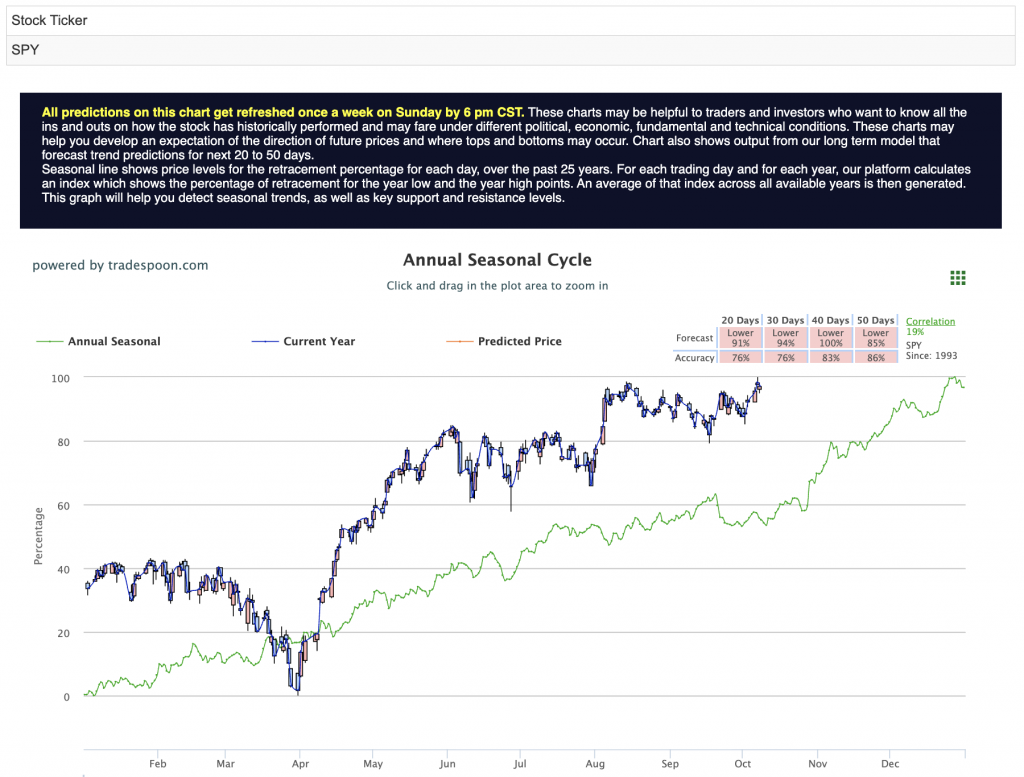
Despite the recent volatility in Treasury yields and oil prices, my broader market outlook remains bullish. The S&P 500 continues to demonstrate resilience, corporate earnings expectations remain strong, and the long-term uptrend has not been invalidated by the recent market fluctuations. While some sectors have experienced selling pressure, investors continue to demonstrate an appetite for companies delivering meaningful earnings growth and attractive long-term opportunities.
Markets are currently trading near their 50-day moving average, an important technical level that can help determine whether the recent consolidation develops into another advance or a deeper correction. The VIX remains around 16, indicating relatively contained expectations for near-term market volatility despite the significant risks confronting investors. Although that reading suggests the market is not experiencing widespread fear, it also leaves room for volatility to increase if economic data, geopolitical events, or earnings results disappoint.
My current upside target for SPY remains $780–$810 over the next several months, while I view the $740–$750 area as an important near-term support zone. A successful defense of that support, particularly if accompanied by stabilizing Treasury yields and constructive earnings announcements, would reinforce the bullish technical outlook and potentially create opportunities to increase exposure.
A sustained move below that region would deserve greater attention, particularly if accompanied by rising volatility, deteriorating market breadth, or another significant increase in interest rates. In that scenario, investors should become more selective and evaluate whether the underlying conditions supporting the market’s advance are beginning to weaken.
For now, I continue to favor the long-term uptrend while maintaining discipline around position sizing, entry prices, and risk management. The market does not need every economic indicator to improve simultaneously in order to advance, but the interaction between interest rates, corporate earnings, and investor expectations will remain critical over the coming weeks.
One of the most interesting developments this week came from the intersection of artificial intelligence and nuclear energy. Alphabet’s Google announced a long-term agreement with Constellation Energy aimed at supporting upgrades to existing nuclear facilities and increasing electricity generation capacity. The arrangement is expected to help add approximately 890 megawatts of power to the grid, reinforcing the growing importance of reliable electricity supplies as technology companies expand their data center operations.
The agreement highlights an important challenge facing the AI industry. While enormous attention has been directed toward semiconductor performance and computing capacity, the availability of reliable electricity is becoming an equally important consideration. Data centers require substantial power to operate continuously, and electricity demand is expected to increase as more businesses deploy increasingly sophisticated AI applications.
Nuclear power offers several characteristics that make it attractive for large technology companies, including dependable generation capacity and the ability to supply substantial amounts of electricity without relying on intermittent weather conditions. Upgrading existing facilities may also provide opportunities to increase output without requiring entirely new power plants to be developed from the ground up.
For investors, this trend creates potential opportunities across power generation, transmission infrastructure, electrical equipment, and companies providing the technology necessary to improve energy efficiency. The investment thesis extends beyond temporary fluctuations in oil prices because it is tied to a longer-term expansion in electricity demand.
Nevertheless, companies operating in these industries are not immune to the broader market environment. Rising interest rates can increase infrastructure financing costs, while regulatory approvals, construction expenses, and project execution risks can influence profitability. Valuations also matter, particularly after strong rallies driven by enthusiasm surrounding AI-related electricity demand.
I believe nuclear energy and the broader power infrastructure sector deserve attention as potential beneficiaries of the AI investment cycle, particularly for investors looking to diversify their exposure beyond the largest technology companies.
The market is entering a particularly important period in which several powerful forces are competing to determine the direction of equities. Corporate earnings are projected to expand at an exceptional pace, artificial intelligence continues to drive significant capital investment, and the labor market is showing signs of slowing without widespread layoffs. These developments provide an encouraging foundation for the economic expansion and help explain why investors have continued supporting equities despite an increasingly complicated macroeconomic environment.
At the same time, the bond market is presenting a serious challenge. The 10-year Treasury yield is approaching levels not seen since 2002, oil prices have moved back above $100 per barrel, and geopolitical uncertainty continues to raise questions about inflation and future Federal Reserve policy. If these pressures intensify, they could limit valuation expansion and create additional volatility even if corporate profits remain strong.
I believe the bullish case remains stronger as long as earnings growth continues to support current valuations and the economy avoids a significant contraction. However, the market may become increasingly selective, favoring companies that can demonstrate real revenue growth, dependable cash flow, and the ability to maintain margins despite higher borrowing and operating costs. Opportunities may also emerge in areas benefiting from structural investment trends, including energy infrastructure, automation, and businesses supporting the ongoing AI expansion.
My outlook for SPY remains unchanged, with an upside objective of $780–$810 and near-term support around $740–$750. I expect continued volatility as investors evaluate earnings, inflation data, Treasury yields, and developments in the Middle East, but I continue to view the long-term uptrend as intact.
The most important developments to monitor in the coming weeks will be whether Treasury yields can stabilize, whether oil prices retreat from their recent highs, and whether corporate earnings can meet the market’s elevated expectations. A favorable combination of those factors could provide the foundation for another meaningful advance, while continued pressure from rates and energy would likely produce a more uneven trading environment.
For now, I remain in the bullish camp. The market has demonstrated considerable resilience, and the strength of corporate earnings provides a meaningful reason to believe the rally can continue. The key is to remain disciplined, recognize that higher interest rates may remain a persistent challenge, and take advantage of attractive opportunities when temporary market volatility creates them.
And remember, we’re not talking about day trading here. I’m looking for 50-100% gains within the next 3 months, so my weekly updates are timely enough for you to act.
*Please note: RoboStreet is part of your free subscription service. It is not included in any paid Tradespoon subscription service. Vlad Karpel only trades his own personal money for paid subscription services. If you are a paid subscriber, please review your Premium Member Picks, ActiveTrader, MonthlyTrader, or RoboInvestor recommendations. If you are interested in receiving Vlad’s personal picks, please click here.
Please share this Tradespoon Market Commentary with your friends.



Comments Off on


Tradespoon Tools make finding winning trades in minute as easy as 1-2-3.
Our simple 3 step approach has resulted in an average return of almost 20% per trade!