 Special Offer: Try the 'Elite Trading Circle Membership' for ONLY $37!
CLICK HERE TO LEARN MORE
Wall Street enters another pivotal week as investors weigh persistent inflation, elevated interest rates, geopolitical tensions, and growing questions about the sustainability of artificial intelligence spending. Following last week’s technology-led selloff, attention is shifting toward a wave of corporate earnings that could determine whether the market can regain its footing and build momentum heading into November.
The broader economic picture remains complicated. Inflation has proven more persistent than anticipated, oil prices remain elevated amid the ongoing conflict involving Iran, and Treasury yields continue to challenge valuations. Meanwhile, the Federal Reserve is preparing for its October 27–28 policy meeting, leaving investors increasingly sensitive to economic data and corporate guidance.
Despite these challenges, I remain bullish on the intermediate- and longer-term outlook for equities. The economy continues to demonstrate resilience, corporate profitability remains relatively strong, and the structural growth opportunities surrounding artificial intelligence have not disappeared. However, the recent volatility underscores an important shift in market sentiment: investors are becoming more selective, placing greater emphasis on earnings quality, sustainable growth, and financial discipline.
Technology stocks bore the brunt of last week’s selling pressure as investors reassessed the enormous capital commitments being made across the artificial intelligence industry. The Nasdaq declined sharply, with semiconductor manufacturers, cloud infrastructure providers, and other AI-related companies facing substantial losses.
The concerns extend beyond valuations. Investors are increasingly questioning whether the hundreds of billions of dollars being invested in data centers, computing infrastructure, and advanced technology will generate sufficient returns to justify the spending. Companies such as Oracle and CoreWeave have experienced significant pressure as Wall Street scrutinizes financing arrangements, debt obligations, and the long-term profitability of these investments.
Higher interest rates have only intensified those concerns. Businesses that rely on borrowing to fund ambitious expansion plans face greater financing costs, while elevated Treasury yields make investors less willing to pay premium valuations for earnings projected years into the future.
Nevertheless, the underlying demand for artificial intelligence remains substantial. Taiwan Semiconductor’s latest quarterly results, including nearly 69% year-over-year profit growth, reinforced the strength of demand for advanced semiconductor technology. This distinction is important because the recent selling does not necessarily indicate that the AI investment cycle is ending. Rather, investors are becoming more discerning about which companies are positioned to turn growing demand into sustainable earnings.
That scrutiny will become particularly important this week as third-quarter earnings season accelerates. Approximately 70 S&P 500 companies are scheduled to report, including several of the market’s most influential technology names.
Netflix is expected to report Tuesday, while Wednesday brings a particularly consequential group of earnings from Tesla, Meta Platforms, IBM, Texas Instruments, and Lam Research. Results from these companies will provide valuable insight into consumer demand, corporate technology spending, semiconductor conditions, and the profitability of major AI investments.
Meta’s results will be especially important as investors assess whether its expanding infrastructure spending is generating meaningful returns through advertising, engagement, and other business operations. Tesla will face scrutiny over vehicle margins, profitability, and its investments in autonomous technology, while semiconductor-related reports should offer further clarity on the strength of the broader technology cycle.
Outside technology, results from General Motors, GE Aerospace, Procter & Gamble, Comcast, and American Express will help investors evaluate economic conditions across manufacturing, consumer spending, and financial services.
The opening round of major bank earnings offered a mixed picture of corporate America. Strong trading activity and certain banking operations demonstrated continued resilience, but financing costs, credit quality, and uneven profitability remained concerns.
Taken together, these developments suggest that corporate earnings will play an increasingly important role in determining market direction. Strong results alone may no longer be enough to satisfy investors, particularly when valuations are elevated. Management guidance, operating margins, capital expenditures, and the ability to sustain earnings growth will likely carry greater weight as the reporting season progresses.
While earnings will dominate this week’s headlines, the macroeconomic environment continues to present considerable challenges.
Last Wednesday’s September Consumer Price Index report showed headline inflation increasing 3.7% year over year, exceeding expectations, while core inflation rose to 2.6%. The hotter-than-anticipated reading contributed to last week’s market weakness and reinforced concerns that inflationary pressures could remain elevated for longer than policymakers would prefer.
Other recent economic releases have painted a similarly complicated picture. Producer prices have remained firm, retail spending has shown resilience, and industrial activity has generally held up despite restrictive monetary conditions. These developments suggest that the economy remains relatively healthy, but they also make it more difficult for the Federal Reserve to justify easing interest rates in the near term.
Following September’s quarter-point rate increase, investors are now evaluating whether the Fed will maintain its current policy stance or pursue additional tightening. With officials entering their communications blackout period ahead of the October 27–28 meeting, economic data and market expectations will drive much of the discussion surrounding the next decision.
Geopolitical developments are further complicating that outlook. The ongoing war involving Iran and disruptions around the Strait of Hormuz have kept global energy markets under pressure, with Brent crude remaining above $100 per barrel and recently moving beyond $109.
Higher oil prices are supporting energy producers, but they also introduce additional inflation risks through rising transportation, manufacturing, and consumer costs. When combined with continued tariff uncertainty, these pressures threaten to squeeze corporate margins and reduce household purchasing power.
Treasury yields remain another important consideration. The 10-year yield has experienced considerable volatility, and elevated borrowing costs continue to weigh on housing, business investment, and the valuations of growth-oriented companies.
The central concern is that persistent inflation and higher energy costs could force the Fed to maintain restrictive monetary policy even as economic growth begins to moderate. For now, however, consumer spending and employment conditions suggest that the economy retains enough momentum to support corporate earnings, provided inflation does not accelerate further.
Despite the recent selling pressure, I continue to believe the longer-term bullish trend remains intact. The market’s resilience over the past several months has been encouraging, although the latest volatility highlights the importance of monitoring technical levels and maintaining a disciplined approach to portfolio management.
The major indexes have been testing their 50-day moving averages, making this an important technical area to watch. A sustained recovery above these levels, accompanied by improving market breadth, would reinforce confidence that the recent weakness represents a temporary consolidation rather than a more significant change in trend.
Volatility has also increased. The CBOE Volatility Index (VIX), which had been trading near 16 earlier last week, climbed above 20 during Friday’s session as technology stocks came under renewed selling pressure. That shift reflects growing uncertainty around inflation, earnings expectations, and the direction of interest rates.
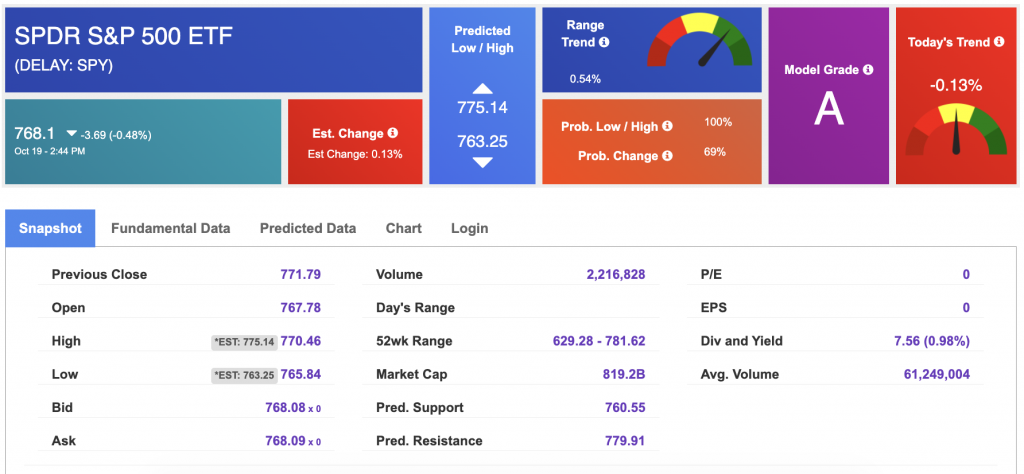
For the SPDR S&P 500 ETF Trust (SPY), my intermediate-term upside target remains 780–810 over the next several months, assuming economic conditions stabilize and corporate earnings continue to support valuations. On the downside, I am monitoring 740–750 as an important support zone, with the 50-day moving average serving as an additional technical reference.
Holding support and rebuilding momentum would strengthen my conviction that the broader bull market has room to advance. Conversely, a sustained breakdown below these levels could suggest that equities need additional time to consolidate before resuming their upward trajectory.
Although I remain constructive, this is not an environment for indiscriminately buying every dip. Investors should remain focused on companies with strong balance sheets, sustainable earnings growth, and favorable long-term fundamentals while managing position sizes and maintaining appropriate downside protection.
The broader opportunities remain attractive, but the margin for error has narrowed.
The coming days could have an outsized influence on market direction as investors digest a heavy earnings calendar alongside several important economic releases.
Housing starts and building permits on Tuesday will provide another indication of how elevated borrowing costs are affecting residential construction. Wednesday’s technology earnings will likely be among the week’s most closely watched developments, particularly given the recent weakness in AI and semiconductor stocks.
Thursday’s weekly jobless claims and leading economic indicators will offer additional perspective on employment conditions and economic momentum. On Friday, preliminary manufacturing and services PMI readings, along with the final University of Michigan consumer sentiment report, should provide insight into business activity, consumer expectations, and inflation pressures.
These releases will help shape expectations heading into the Federal Reserve’s October 27–28 meeting, which remains one of the most important upcoming catalysts for Treasury yields and equity markets.
Beyond the immediate economic calendar, seasonality could begin to work in investors’ favor. Historically, the final months of the year have often been supportive of equity performance, particularly when corporate earnings remain healthy and institutional investors position portfolios for the coming year.
Of course, seasonal tendencies are never guaranteed, especially in an environment characterized by geopolitical uncertainty, elevated energy costs, and restrictive monetary policy. Nevertheless, the combination of resilient earnings, continuing technological investment, and potential year-end buying could provide meaningful support if inflation and interest rates begin to stabilize.
I remain bullish on the market’s intermediate- and longer-term prospects, but I also recognize that investors are navigating a more demanding environment than earlier in the year.
The opportunities surrounding artificial intelligence, innovation, and corporate growth remain compelling. However, companies will increasingly need to demonstrate that their investments can translate into sustainable profitability rather than relying solely on optimistic projections.
At Tradespoon, our focus remains on helping investors navigate these changing conditions through quantitative analysis, disciplined stock selection, and risk-management strategies designed to identify opportunities while controlling downside exposure.
I continue to favor fundamentally strong companies and believe the broader market can resume its upward trajectory as earnings provide greater clarity. Still, inflation, elevated oil prices, and the Federal Reserve’s policy outlook remain important risks that investors cannot afford to ignore.
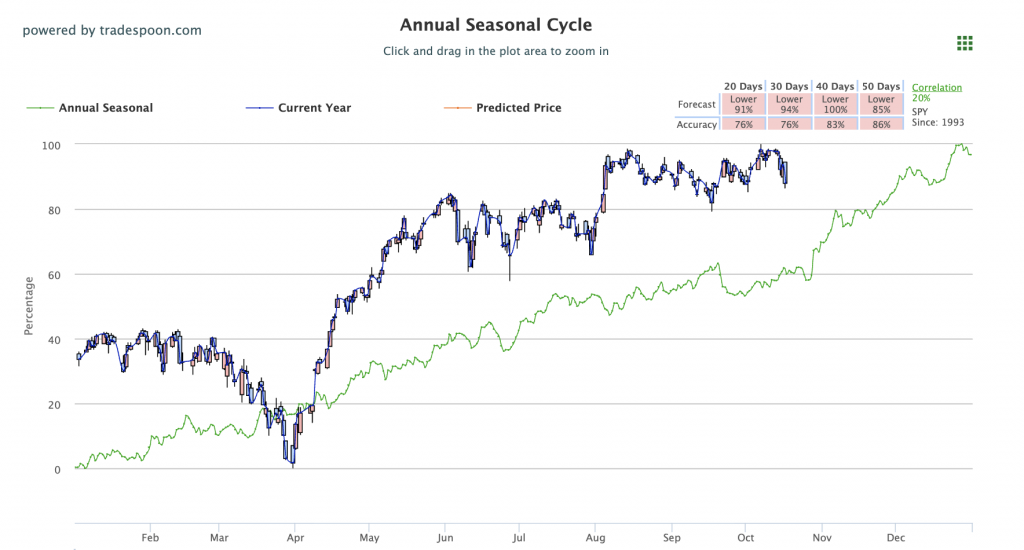
The long-term bull market remains intact in my view, but the next phase will demand greater selectivity and discipline. With SPY targeting 780–810 over the coming months, I believe opportunities remain substantial for investors who balance conviction with sound risk management.
The coming earnings reports and next week’s Federal Reserve decision should help determine whether Wall Street can turn its recent volatility into the foundation for another sustained advance.
Please share this Tradespoon Market Commentary with your friends.



Comments Off on


Tradespoon Tools make finding winning trades in minute as easy as 1-2-3.
Our simple 3 step approach has resulted in an average return of almost 20% per trade!