 Save Big on Commissions ($0.65 per Contract)
CLICK HERE TO LEARN MORE
Wall Street is navigating another volatile stretch as investors weigh a resilient economy against persistent inflation, elevated interest rates, geopolitical tensions, and growing concerns surrounding artificial intelligence spending.
Markets received a powerful reminder this week that a strong economy does not necessarily guarantee a stronger stock market. Thursday’s combination of accelerating economic growth, stubborn inflation, and a sharp selloff in Alphabet exposed the competing forces driving investor sentiment as October draws to a close.
What began as an encouraging rebound in artificial intelligence and semiconductor stocks has evolved into another test of valuations, corporate spending, and Federal Reserve policy. The S&P 500 continues to trade near its 50-day moving average, while the VIX hovers around 18, reflecting an environment in which investors remain cautious despite the market’s longer-term resilience.
This has been one of the more consequential weeks of the fourth quarter, with investors navigating a Federal Reserve decision, major economic releases, escalating Middle East tensions, and a wave of corporate earnings that includes some of the most influential companies in the S&P 500. The central question facing Wall Street is whether economic growth and corporate profits can remain strong enough to justify current valuations without forcing the Fed to tighten monetary policy further.
That tension has been particularly evident in technology, where enthusiasm for AI infrastructure continues to support long-term growth expectations, but investors are becoming less tolerant of enormous capital expenditures that have yet to generate convincing returns. Meanwhile, oil prices near six-month highs, continued uncertainty surrounding tariffs and international trade, and volatile Treasury yields have complicated the inflation outlook and kept financial markets sensitive to each new headline.
Markets opened the week Monday on a more optimistic note, recovering some momentum after recent weakness across technology and semiconductor stocks. Renewed enthusiasm surrounding Anthropic’s anticipated public offering helped revive interest in the artificial intelligence trade, lifting chipmakers and technology-related companies that had come under pressure from concerns about borrowing costs and excessive infrastructure spending.
Nvidia, Micron, AMD, and other semiconductor names participated in the rebound as investors returned to companies positioned to benefit from continued AI development. The S&P 500 advanced approximately 0.7%, while the Nasdaq gained 0.8%, setting a constructive tone ahead of a particularly demanding earnings and economic calendar. The recovery also highlighted how quickly sentiment can shift when expectations for AI-related growth improve, even as questions about the financing and profitability of the broader investment cycle remain unresolved.
Oil prices provided some additional relief early in the week as renewed diplomatic efforts raised hopes that tensions involving Iran could ease. Brent crude retreated modestly from recent highs, although prices remained elevated following attacks on Saudi energy infrastructure and continued threats to regional shipping routes.
These developments have become particularly important because rising energy prices feed directly into inflation expectations, transportation expenses, and corporate operating costs. With Brent trading near $115 per barrel and WTI above $100 during the week, the energy market remains a major obstacle to a more favorable inflation outlook. Any sustained disruption around the Strait of Hormuz or additional damage to production and transportation facilities could quickly reverse temporary relief in crude prices and complicate the Fed’s efforts to stabilize inflation.
Tuesday brought another round of encouraging economic data, reinforcing the argument that the U.S. economy continues to demonstrate resilience despite restrictive monetary policy. September durable goods orders rose 1.8%, supported by strong aircraft demand, while orders for nondefense capital goods excluding aircraft increased 0.5%. Shipments of these core capital goods climbed 1.2%, suggesting that business investment remained a significant contributor to third-quarter growth.
Much of that strength continues to come from technology infrastructure, data centers, and equipment associated with the AI investment boom. The figures provided another indication that corporate spending remains substantial, even as businesses face higher financing expenses and uncertainty surrounding future demand.
Consumer sentiment offered additional encouragement Tuesday, with the Conference Board’s Consumer Confidence Index climbing to 91.7 in October from 84.2 in September. The improvement was considerably stronger than economists expected and reflected more favorable assessments of current business conditions and the near-term outlook.
However, the report also showed that households remain concerned about elevated food, energy, and everyday living expenses. The distinction is important: consumers may feel somewhat better about the economy, but persistent inflation continues to constrain purchasing power and spending decisions. For the Fed, stronger confidence and robust investment activity suggest the economy can withstand restrictive interest rates, potentially reducing the urgency to ease monetary policy.
Equities responded positively to Tuesday’s developments, with the Nasdaq gaining approximately 1.2% and the S&P 500 advancing 0.6%. Semiconductor and AI-related companies again led the advance, supported by further developments involving Anthropic and financing arrangements for AI infrastructure. Broadcom benefited from optimism surrounding demand for its technology, while memory and equipment companies continued recovering from recent selling pressure. However, participation across the broader market remained uneven, with several major companies responsible for a disproportionate share of index gains. This narrow leadership has become an important characteristic of the current trading environment, particularly as investors question whether earnings growth outside the largest technology companies can provide enough support for another sustained advance.
Wednesday shifted the market’s attention squarely toward Washington as the Federal Reserve concluded its two-day policy meeting. As widely expected, the central bank maintained its benchmark interest rate at 3.75%–4.00%, following September’s quarter-point increase. The decision passed by a 10–2 vote, with two policymakers favoring another increase, underscoring the continuing debate over how aggressively the Fed should respond to persistent inflation. Chair Kevin Warsh emphasized the importance of gathering more information before deciding on the next appropriate policy adjustment, rather than committing to a specific course of action. While the absence of an immediate rate hike provided some relief, the Fed’s acknowledgment of strong economic activity and elevated inflation reinforced the possibility that another increase could arrive before year-end.
The central bank’s message is particularly significant because the 10-year Treasury yield continues to fluctuate within a broad 4.5%–5.5% range, trading near 5% this week. Higher bond yields increase financing costs for corporations and households while simultaneously making fixed-income investments more competitive with equities. This creates additional pressure on companies whose valuations depend heavily on future earnings, including many of the market’s largest technology and AI-related businesses. Wednesday’s modest equity gains suggested that investors were comfortable with the Fed’s decision to wait, but uncertainty surrounding December policy remained unresolved.
Beyond the Fed, Wednesday also brought encouraging developments for semiconductor manufacturers. South Korean memory-chip producer SK Hynix reported a dramatic increase in quarterly profits, supported by continued demand for high-performance memory used in AI infrastructure. Its results helped lift Micron and other semiconductor companies, reinforcing the argument that demand for computing capacity and advanced components remains substantial.
However, the positive news also emphasized a growing distinction within the AI trade. Companies supplying essential hardware and infrastructure are demonstrating tangible demand, while some of the technology giants financing these investments are facing tougher questions about how quickly spending will translate into stronger profits and free cash flow.
That distinction became even more apparent following Wednesday’s closing bell, when Microsoft and Alphabet delivered sharply contrasting earnings results. Microsoft reported quarterly revenue of approximately $92.3 billion, representing 19% year-over-year growth, while Azure revenue increased 48%, demonstrating continued strength in cloud computing and enterprise AI demand. Alphabet, however, disappointed investors despite strong growth in its Google Cloud business.
Revenue of approximately $127.6 billion fell short of expectations, while substantial infrastructure expenditures contributed to negative free cash flow of roughly $9.1 billion. Investors also expressed concern about weaker-than-expected advertising performance and the company’s plans for additional capital spending. The contrast reinforced a changing market standard: aggressive AI investment may still be rewarded, but only when accompanied by sufficient revenue growth, profitability, and evidence that the spending can produce sustainable financial returns.
Thursday’s trading highlighted investor concerns over AI spending, with Alphabet falling more than 10% and dragging the broader tech sector lower. Markets also digested a stronger-than-expected 3.4% Q3 GDP growth reading and September’s PCE inflation report, both key inputs for assessing economic strength and the Fed’s next policy moves.
Expenditures report revealed that inflation remains considerably above the Fed’s target. Headline PCE inflation reached 3.6% year over year, while core PCE increased 3.1%. On a monthly basis, headline prices rose 0.5%, while the core measure increased 0.3%. These readings followed September’s Consumer Price Index report, which showed headline inflation at 3.7%, further complicating the outlook for monetary policy.
The details of Thursday’s consumer spending report also deserve attention. Personal income increased just 0.2% in September, while nominal consumer spending rose 0.5%. After adjusting for inflation, real consumer spending was essentially unchanged for the month, suggesting that higher prices are absorbing much of the increase in household expenditures.
Meanwhile, initial unemployment claims fell to 194,000, reflecting continued stability in layoffs despite indications that hiring activity has slowed. Taken together, the reports paint a complicated economic picture: growth remains strong, employers are generally holding on to workers, and inflation has not cooled sufficiently to allow the Fed to declare victory. This combination raises the risk that borrowing costs could remain elevated longer than investors would prefer.
Geopolitical uncertainty remains another important variable entering the final trading session of October. Thursday’s renewed diplomatic efforts involving the United States and Iran helped ease crude oil prices modestly, but reports of additional attacks and threats to energy infrastructure kept the market’s risk premium elevated. Beyond the immediate impact on energy prices, continued Middle East instability could influence shipping costs, business confidence, and supply chains. Tariff uncertainty and broader international trade tensions add to those concerns, particularly for manufacturers and multinational companies facing fluctuating input costs. With inflation already proving persistent, another sustained increase in energy prices could make it more difficult for the Fed to balance economic growth against price stability.
Looking ahead, next week’s economic calendar offers little opportunity for markets to settle. Monday’s ISM Manufacturing PMI will provide an early indication of October business activity, followed Tuesday by the JOLTS job openings report, which will help investors assess whether labor demand continues to soften. Wednesday brings the ADP private-sector employment report and ISM Services PMI, along with additional trade data. The most anticipated release arrives Friday, November 6, when the October employment report will provide updated figures on nonfarm payrolls, unemployment, and average hourly earnings.
The November 3 midterm elections could also add another source of market uncertainty as investors consider potential changes to the policy environment. Together, these developments will help shape expectations for the Fed’s December meeting and determine whether recent economic strength is sustainable.
My outlook remains bullish despite the near-term uncertainty. The economy continues to expand, corporate investment remains substantial, and the longer-term growth potential of artificial intelligence and other emerging technologies has not disappeared. However, the market is becoming more selective, and higher Treasury yields, persistent inflation, expensive energy, and questions surrounding AI profitability could produce additional periods of volatility.
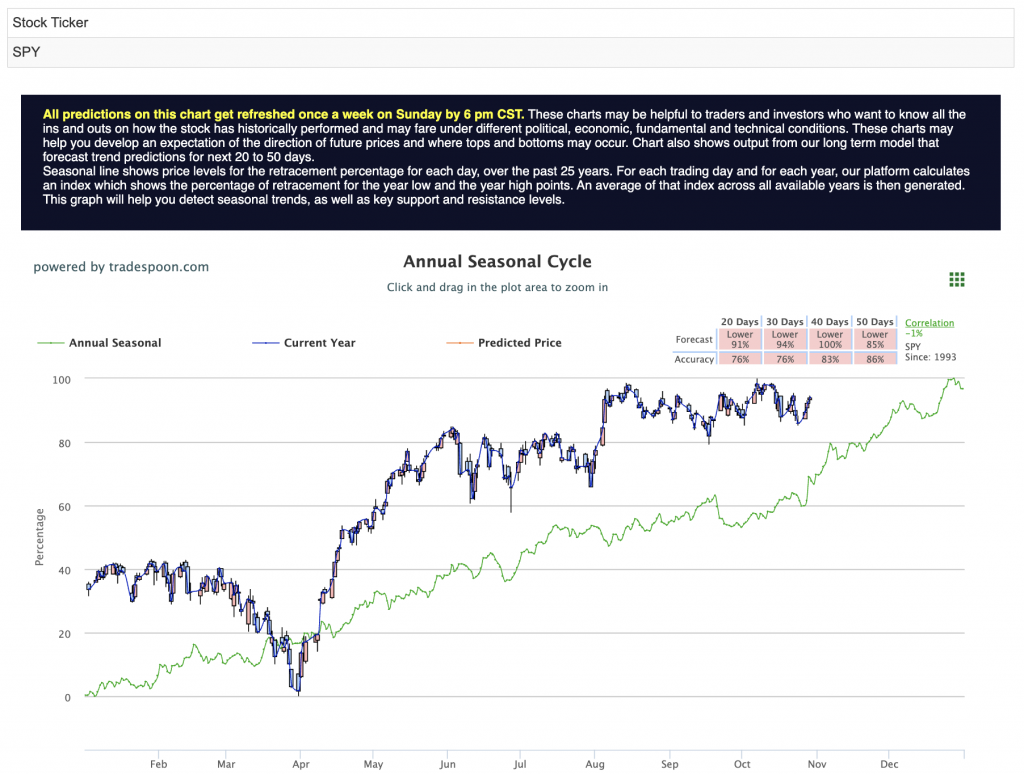
I continue to view the $780–$810 area as a potential upside objective for SPY over the next several months, while $740–$750 remains an important support zone during market pullbacks. I will be closely monitoring price action around the 50-day moving average, the direction of Treasury yields, the VIX, crude oil, and the market’s response to upcoming economic data. The long-term bullish trend remains intact, but in this environment, patience, discipline, and effective risk management remain essential to navigating the next phase of the market.
And that is exactly where RoboInvestor proves its value. Built for a headline-sensitive, range-bound market, our flagship AI-driven advisory helps cut through Fed uncertainty, tariff chatter, geopolitical risk, and AI hype to focus on what matters most: statistically grounded setups and clear risk-reward opportunities. With RoboInvestor, investors can stay engaged, stay disciplined, and act with precision instead of reacting emotionally to every headline.
Every other weekend, you’ll receive the RoboInvestor newsletter—a concise, high-signal read with market context, technical outlooks, updates on open positions, and clear, actionable trade ideas so you’re prepared and confident heading into Monday’s open.
Explore our latest forecasts, trade signals, and live strategy sessions at Tradespoon.com. Navigate uncertainty with confidence—and position yourself ahead of the curve.
Whether you’re targeting blue-chip stocks, ETFs, commodities, or inverse ETFs, RoboInvestor offers a flexible, forward-looking approach tailored to today’s market conditions. Our model portfolio typically holds 12 to 25 carefully selected positions, and we’ve recently adopted an even more selective strategy—focused on quality, resilience, and opportunity.
Join us and take advantage of advanced AI technology to guide your investments with precision and confidence.
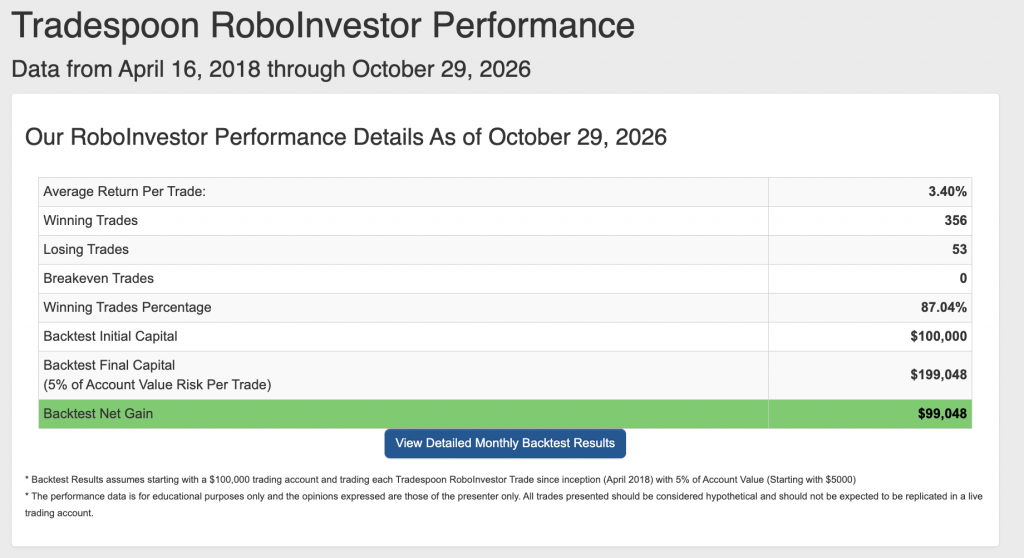
Our track record is one of the best in the retail advisory industry, with a Winning Trades Percentage of 87.04% since April 2018.
In this environment, a disciplined, insight-driven framework matters more than ever—one that cuts through the noise, respects the bond market’s influence, manages rate and employment risk, and helps you position proactively for the opportunities and pivots that tend to define the first quarter.
As we move through Q4 of 2026, investors continue navigating a market that appears calm on the surface but remains highly sensitive beneath it. Geopolitical developments in the Middle East, shifting tariff policy, and an uncertain Federal Reserve path continue to influence investor sentiment as inflation gradually cools, but interest rates remain elevated. Meanwhile, economic data has become more mixed, with the labor market showing signs of moderation while corporate earnings continue to demonstrate remarkable resilience.
Whether you are a seasoned investor or just starting, our team is here to help you every step of the way. Don’t face the challenges of tomorrow alone–join RoboInvestor today and take your investing to the next level.
Stay alert, stay strategic—and trade smart.
And remember, we’re not talking about day trading here. I’m looking for 50-100% gains within the next 3 months, so my weekly updates are timely enough for you to act.
*Please note: RoboStreet is part of your free subscription service. It is not included in any paid Tradespoon subscription service. Vlad Karpel only trades his own personal money for paid subscription services. If you are a paid subscriber, please review your Premium Member Picks, ActiveTrader, MonthlyTrader, or RoboInvestor recommendations. If you are interested in receiving Vlad’s personal picks, please click here.
Please share this Tradespoon Market Commentary with your friends.



Comments Off on


Tradespoon Tools make finding winning trades in minute as easy as 1-2-3.
Our simple 3 step approach has resulted in an average return of almost 20% per trade!