 Special Offer: Try the 'Elite Trading Circle Membership' for ONLY $37!
CLICK HERE TO LEARN MORE
Special Offer: Try the 'Elite Trading Circle Membership' for ONLY $37!
CLICK HERE TO LEARN MORE
Markets are beginning the week under renewed pressure as investors once again confront the combination that has defined much of 2026: resilient economic growth, persistent inflation, higher interest rates and geopolitical uncertainty.
Stocks moved lower Monday as crude oil prices jumped and Treasury yields pushed deeper into multi-decade territory. By late morning, the S&P 500 was down roughly 0.8%, the Nasdaq was off about 1% and the Dow had declined more than 350 points. The selling followed another setback in efforts to reach an agreement between the United States and Iran, bringing energy prices and inflation risk back to the center of the market conversation.
Brent crude climbed toward $108 per barrel Monday while U.S. crude moved back into the mid-$90s. The importance of that move extends far beyond energy stocks. Higher oil prices increase transportation, manufacturing and consumer costs, while adding another layer of difficulty for the Federal Reserve as it tries to push inflation back toward its 2% target.
The bond market is sending an equally important signal. The 10-year Treasury yield moved to roughly 5.26% Monday, its highest level since 2007, while the 30-year yield climbed near 5.58%, reaching levels not seen since 2004. The two-year yield has also risen sharply throughout September as investors increasingly price in additional Federal Reserve tightening.
Markets are now assigning roughly a 70% probability to another 25-basis-point Fed rate increase at the October meeting. That follows the Fed’s September 16 increase to a target range of 3.75%–4.00%, its first hike since 2023. The message from the bond market is increasingly clear: investors are preparing for interest rates to remain higher for longer.
Monday’s Dallas Fed Manufacturing Survey showed a sharp acceleration in Texas factory activity. The production index surged to 29.5 from 16.1, new orders increased to 30.7 and employment improved to 15.1. Those are encouraging signals for economic growth.
The inflation details, however, were considerably less comforting. The raw-materials price index jumped to 52.2 from 44.1, while finished-goods prices and wages also accelerated. Texas businesses reported average input-cost growth of 4.9% over the past year, the strongest pace in more than two years.
That closely resembles what we saw in last week’s national data. September’s S&P Global Composite PMI reached 58.4, the strongest reading in more than five years, while hiring strengthened and business investment remained healthy. But cost pressures also increased.
In other words, the problem facing the Fed is not economic weakness. It is an economy that may be growing too quickly for inflation to cool comfortably.
That distinction matters for equities.
A strong economy remains supportive of corporate earnings, consumer spending and the broader bull-market thesis. But every upside economic surprise also creates the possibility of higher Treasury yields and additional Fed tightening. The market therefore finds itself in the unusual position where exceptionally strong economic data can sometimes become negative for stocks.
This week’s economic calendar will provide one of the most important tests of that dynamic since the Fed’s September meeting.
Wednesday’s inflation report deserves particular attention. Headline PCE inflation increased 3.7% year over year in July, while core inflation remained at 3.3%. With energy prices rising again and several recent business surveys reporting increased input costs, investors need evidence that underlying inflation is beginning to stabilize rather than accelerate.
The consumer remains another important piece of the puzzle.
Friday’s University of Michigan survey showed consumer sentiment falling to 48.1 in September from 51.7 in August, the weakest reading in four months. More importantly for the Fed, consumers’ one-year inflation expectations increased to 4.6% from 4.0%. That suggests households are becoming increasingly sensitive to higher prices even while the broader economy and labor market remain resilient.
This is the economic contradiction investors will need to navigate throughout the fourth quarter: businesses continue to invest and hire, while consumers are becoming increasingly concerned about inflation and purchasing power.
Despite the macro pressure, the AI investment cycle remains an important source of market strength.
Nvidia gained Monday after announcing an additional $150 billion share-repurchase authorization, the largest increase in the company’s history. More broadly, semiconductor and AI-related stocks continue to attract capital even as rising yields pressure other areas of the market.
That resilience matters because technology remains one of the primary reasons the major indexes have held up considerably better than the average stock.
There has been noticeable deterioration beneath the surface. Through Friday, eight of the 11 S&P 500 sectors were negative for September, while the equal-weight S&P 500 had fallen roughly 4%. The headline S&P 500, by comparison, remained near its highs because of strength among several large technology and AI-related companies.
That is not necessarily bearish, but it does mean market breadth deserves close attention. A sustainable breakout toward new highs would be healthier if participation begins expanding beyond the largest technology companies.
Volatility also remains surprisingly subdued relative to the moves occurring in bonds. Cboe noted that the VIX finished last week near 14.9, close to a one-year low, even as interest-rate volatility increased sharply. That divergence suggests equity investors have so far been much less concerned about rising yields than bond investors.
The market continues to revolve around the same four variables: oil, Treasury yields, inflation and earnings.
Oil may be the most immediate catalyst. A meaningful decline in crude prices would reduce inflation pressure, give the Fed additional flexibility and potentially allow Treasury yields to stabilize. Any escalation that pushes Brent materially above today’s levels could have the opposite effect.
The 10-year Treasury yield is the second major variable. A sustained move above the recent 5.20%–5.30% area would likely create additional valuation pressure, particularly for long-duration growth stocks. A retreat back toward 5% would give equities considerably more breathing room.
Third is the Fed. Markets are already assigning significant probability to another October rate increase. Because expectations have shifted so quickly, this week’s employment and inflation data now carry even more weight than usual.
Finally, corporate earnings remain the foundation underneath the bull case. As long as profits continue growing and AI-related capital spending remains strong, higher yields may create volatility without necessarily ending the broader market advance.
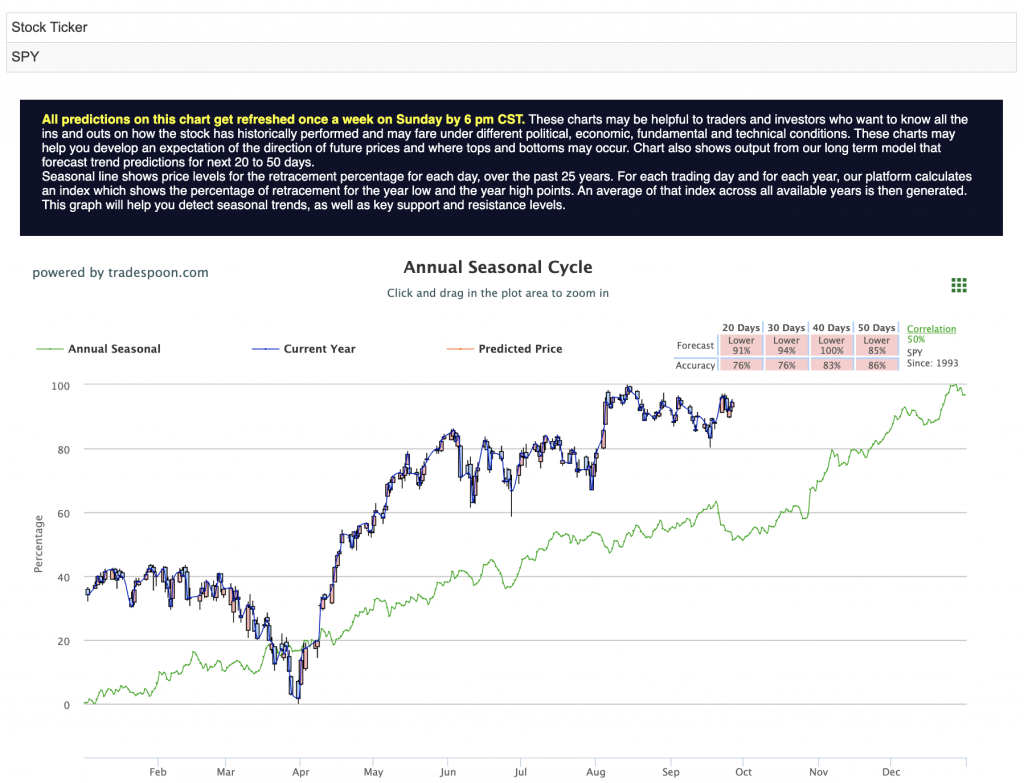
I remain in the market-bullish camp, although the path higher has clearly become more complicated.
The long-term trend remains supported by resilient economic growth, strong corporate earnings, continued capital investment and a powerful AI spending cycle. At the same time, investors should recognize that the market has considerably less room for disappointment with Treasury yields above 5%, oil above $100 and the Fed once again tightening monetary policy.
I continue to view SPY 780–810 as the next major upside zone, while the 740–750 area remains important support over the next several months.
The most constructive scenario would be continued moderate economic growth accompanied by softer inflation and some cooling in oil prices. That combination could allow earnings to remain strong while removing pressure from Treasury yields.
The more difficult scenario would be another round of very strong economic data combined with sticky inflation. In the current environment, that could push the market toward expectations for additional Fed hikes and drive long-term yields even higher.
That makes this week’s sequence particularly important.
JOLTS will tell us whether demand for workers remains elevated. PCE will tell us whether inflation is improving. ISM will provide a broader picture of manufacturing growth and pricing pressure. Friday’s employment report will then help determine whether the labor market is cooling enough to give the Fed room to slow down.
For now, the bull market remains intact, but this is no longer simply an earnings story. Oil, inflation and interest rates have become equally important drivers.
Traders should remain disciplined, monitor the 50-day moving-average area and pay especially close attention to Treasury yields and crude prices around this week’s major economic releases. If yields stabilize and the incoming data shows even modest progress on inflation, I believe pullbacks can continue to represent opportunities within the broader uptrend.
If yields and oil continue accelerating together, however, volatility is likely to remain elevated as the market adjusts to the possibility that interest rates stay higher for considerably longer than investors expected only a few weeks ago.
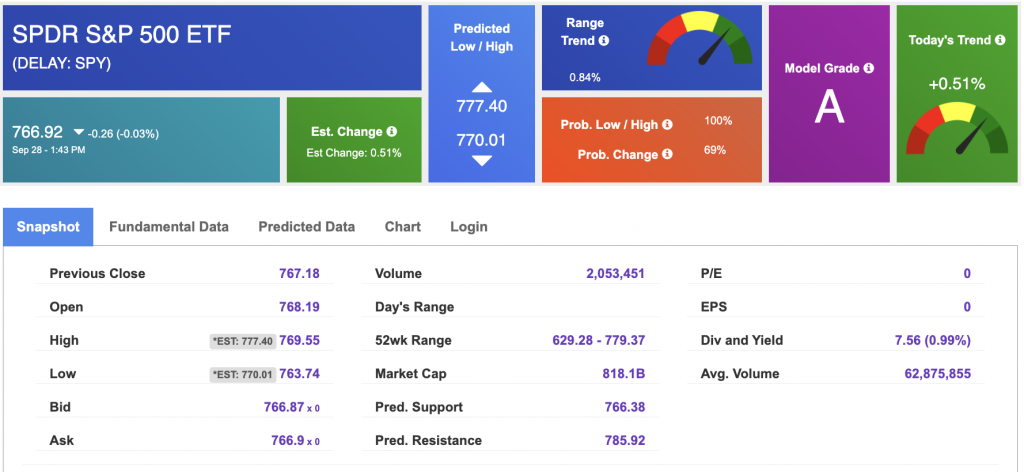
Please share this Tradespoon Market Commentary with your friends.



Comments Off on


Tradespoon Tools make finding winning trades in minute as easy as 1-2-3.
Our simple 3 step approach has resulted in an average return of almost 20% per trade!