 Sign Up for One-on-One Coaching and get our Premium Membership FREE for 1 Year!
CLICK HERE TO APPLY
Sign Up for One-on-One Coaching and get our Premium Membership FREE for 1 Year!
CLICK HERE TO APPLY
Falling oil prices are easing immediate inflation concerns, but semiconductor weakness, tariffs and a packed week of major catalysts are keeping investors cautious.
Markets began the week with an early relief rally after the United States and Iran paused military strikes, sending crude oil and Treasury yields lower. Those gains faded as another wave of semiconductor selling pressured SPY and QQQ, while the Dow remained relatively stronger.
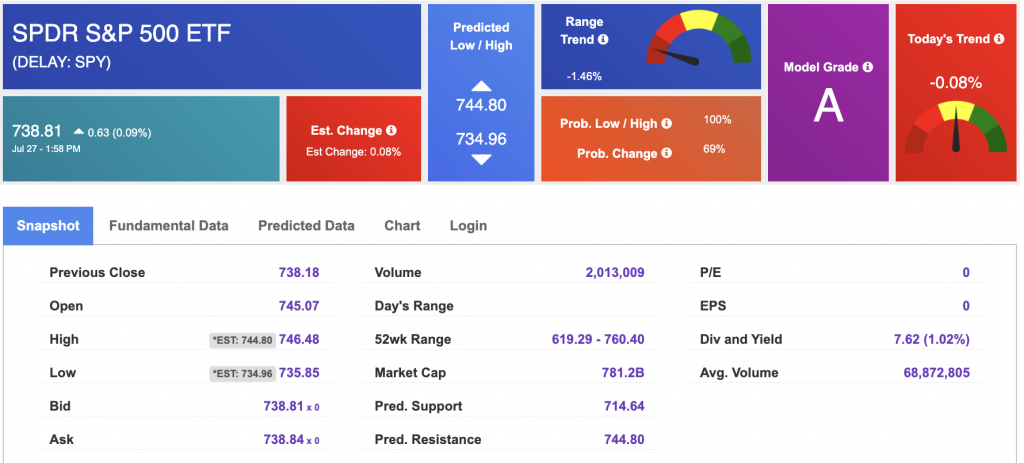
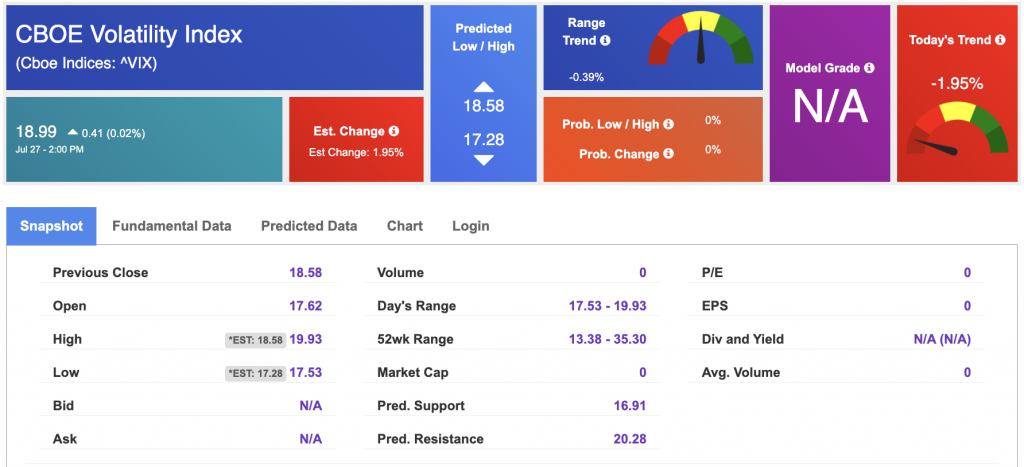
SPY was trading near $737 Monday afternoon after briefly reaching approximately $746 at the open. The VIX climbed toward 19, reflecting increased uncertainty without signaling outright panic.
I remain in the MARKET BULLISH camp. The primary risk is that inflation remains persistent and interest rates stay higher for longer. I believe the SPY rally can reach the $760–$780 range, with short-term support at $700–$720 over the next several months. The long-term trend remains intact, but the market has become increasingly selective.
Crude oil delivered the day’s largest macro move. U.S. crude fell more than 7% toward $83 per barrel, while Brent dropped toward $89 following the temporary pause in attacks between the United States and Iran.
The decline removes part of the inflation premium that entered the market when Brent briefly moved above $100 last week. Lower oil prices could ease pressure on consumers, transportation costs and Treasury yields while giving the Federal Reserve more flexibility.
However, the geopolitical risk has not disappeared. Shipping through the Strait of Hormuz remains disrupted, regional tensions remain elevated and military action could resume if negotiations break down. Oil prices are likely to remain one of the market’s most important variables.
Lower crude benefited airlines, cruise operators and other fuel-sensitive companies, while major energy producers declined. That rotation demonstrates how quickly market leadership can shift when oil moves sharply.
Technology remained the weakest major area Monday, with Nvidia and Micron falling sharply and the Philadelphia Semiconductor Index extending its recent correction. The semiconductor group is now well below its June peak as investors reassess valuations, competition and the sustainability of the artificial intelligence trade.
The weakness was not universal. Microsoft, Apple, Alphabet and several software companies performed better, suggesting that investors are not abandoning technology entirely. Instead, money is rotating toward businesses with more dependable earnings, cash flow and near-term AI monetization.
That distinction will become increasingly important as the week progresses. Companies that can demonstrate clear returns on their AI investments may continue to attract capital, while stocks built primarily on long-term expectations could remain vulnerable.
Monday’s economic reports showed that business investment remains resilient. Durable-goods orders increased in June, while core capital-goods orders and spending on computers and electronic products also improved.
The Dallas Fed manufacturing survey showed stronger production, new orders and business confidence. However, raw-material prices and wage costs remained elevated, reinforcing the Fed’s concern that inflation has not been fully contained.
New tariffs are another potential source of inflation. Duties on goods from dozens of U.S. trading partners could eventually raise consumer prices, reduce corporate margins or force companies to adjust supply chains.
These crosscurrents make Wednesday’s Federal Reserve decision more difficult. Lower oil prices reduce the urgency for additional tightening, but persistent inflation, wage pressure, tariffs and continued economic strength could keep interest rates elevated.
The Fed’s message may matter more than the decision itself. A patient tone could support stocks and bonds, while aggressive inflation guidance could push yields higher and renew pressure on technology and other rate-sensitive sectors.
Microsoft and Meta report Wednesday, followed by Apple and Amazon Thursday. Qualcomm, Visa, Boeing, Coca-Cola, PayPal, Starbucks, Exxon Mobil and Chevron are also scheduled to release results.
Investors will focus on more than headline earnings. After disappointing reactions to Alphabet and Tesla last week, the market wants evidence that massive AI capital expenditures are generating enough revenue and cash flow to justify current valuations.
Thursday also brings the advance estimate of second-quarter GDP, personal income and spending, and the Fed’s preferred PCE inflation report. The ideal outcome would be respectable growth accompanied by moderating inflation.
Strong growth combined with persistent inflation could strengthen the higher-for-longer interest-rate argument. Weak growth with elevated inflation would be even more concerning because it could revive stagflation fears.
Friday’s Employment Cost Index, Chicago PMI and consumer-sentiment readings will provide additional information about wage inflation, manufacturing activity and household expectations.
The longer-term market trend remains constructive, but Monday’s session illustrates why this is no longer an easy momentum environment. Oil and yields fell, yet weakness in a relatively small number of heavily weighted semiconductor stocks was enough to pressure the broader indexes.
The bullish case requires oil to remain below last week’s highs, Treasury yields to stabilize and Big Tech companies to demonstrate that AI investment is translating into sustainable growth. A steady Fed decision and reasonable inflation data could allow SPY to regain momentum toward the $760–$780 target zone.
The bearish scenario would involve renewed conflict with Iran, another oil spike, hawkish Fed guidance and disappointing technology earnings. Under that combination, SPY could test the $720 area, with $700–$720 remaining the broader support zone.
For now, the VIX near 19 reflects uncertainty rather than panic. Traders should remain selective, avoid chasing opening moves and keep position sizes appropriate for a market capable of reacting sharply to earnings, economic reports and geopolitical headlines.
West Texas Intermediate for Crude Oil delivery (CL.1) is priced at $82.27 per barrel, down 7.88%, at the time of publication.
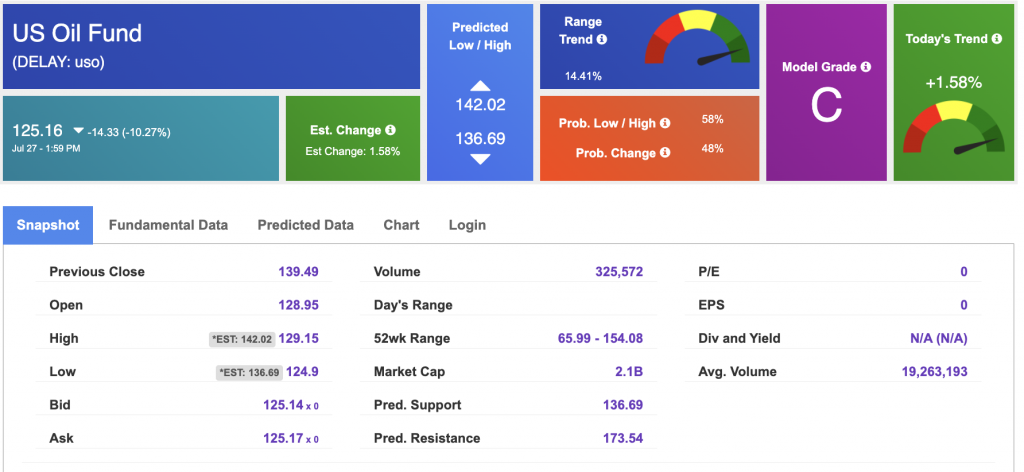
Looking at USO, a crude oil tracker, our 10-day prediction model shows mixed signals. The fund is trading at $125.16 at the time of publication. Prediction data is uploaded after the market close at 6 p.m., CST. Today’s data is based on market signals from the previous trading session.
The price for the Gold Continuous Contract (GC00) is up 0.27% at $4,081.90 at the time of publication.
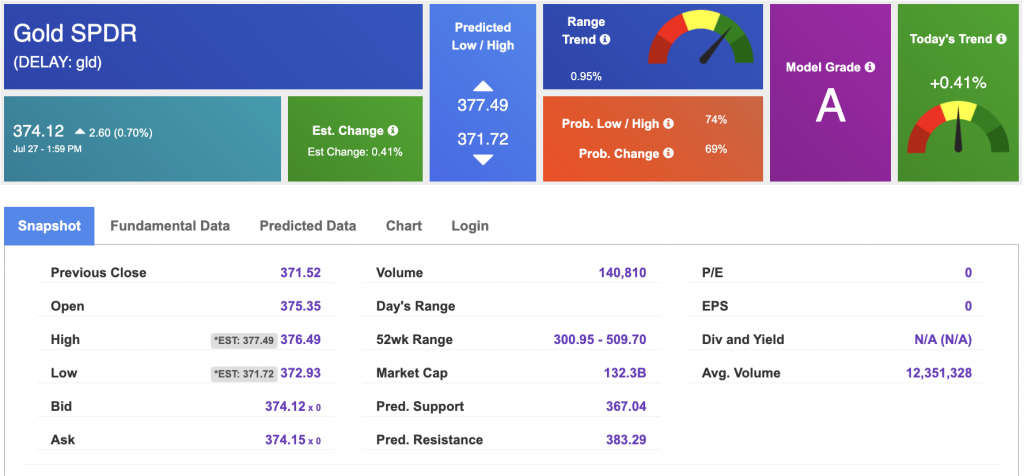
Using SPDR GOLD TRUST (GLD) as a tracker in our Stock Forecast Tool, the 10-day prediction window shows mixed signals. The gold proxy is trading at $374.12 at the time of publication. Vector signals show +0.41% for today. Prediction data is uploaded after the market close at 6 p.m., CST. Today’s data is based on market signals from the previous trading session.
The yield on the 10-year Treasury note is down at 4.649% at the time of publication.
The yield on the 30-year Treasury note is down at 5.129% at the time of publication.
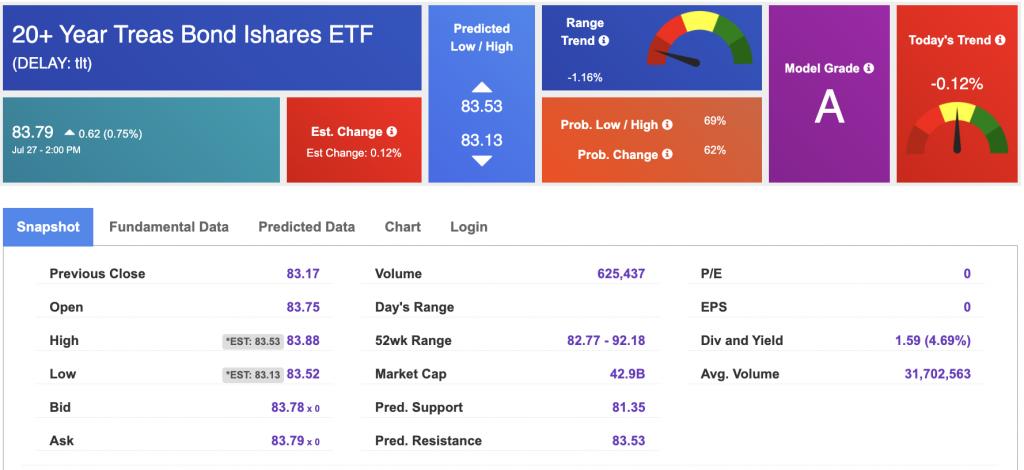
Using the iShares 20+ Year Treasury Bond ETF (TLT) as a proxy for bond prices in our Stock Forecast Tool, we see mixed signals in our 10-day prediction window. Prediction data is uploaded after the market close at 6 p.m., CST. Today’s data is based on market signals from the previous trading session.
The CBOE Volatility Index (^VIX) is priced at $18.99 at the time of publication, and our 10-day prediction window shows mixed signals. Prediction data is uploaded after the market close at 6 p.m., CST. Today’s data is based on market signals from the previous trading session.
Please share this Tradespoon Market Commentary with your friends.



Comments Off on


Tradespoon Tools make finding winning trades in minute as easy as 1-2-3.
Our simple 3 step approach has resulted in an average return of almost 20% per trade!