 Are you a Long-Term Trader? Then take a look at our NEW RoboInvestor Service?
CLICK HERE TO LEARN MORE
Are you a Long-Term Trader? Then take a look at our NEW RoboInvestor Service?
CLICK HERE TO LEARN MORE
Stocks enter a critical week near record highs as rising oil, key inflation data, Treasury yields, and another wave of earnings put the market’s bullish momentum to the test.
U.S. stocks enter the week near record highs, supported by strong corporate earnings, easing geopolitical fears and confidence that the economy can slow without slipping into recession. That bullish backdrop remains intact, but another test is arriving. Renewed uncertainty surrounding Iran and the Strait of Hormuz has pushed crude higher Monday, while investors prepare for CPI, PPI, Retail Sales and another round of earnings. I remain in the MARKET BULLISH camp, with the SPY capable of reaching $760-$780 over the coming months, while $700-$720 remains important support. The biggest risk continues to be higher-for-longer interest rates if inflation refuses to cooperate.
Last week gave investors several reasons for optimism. Progress in U.S.-Iran negotiations raised hopes that the Strait of Hormuz could reopen, sending crude lower, easing inflation concerns and reducing pressure on Treasury yields.
Corporate earnings strengthened the bullish case. Results remained impressive despite elevated rates, tariffs and geopolitical uncertainty, while market leadership broadened beyond mega-cap technology. Softer labor data also reinforced the soft-landing narrative, showing employment conditions cooling without widespread layoffs.
At the same time, investors became more demanding toward AI-related companies. Strong growth alone is no longer enough at elevated valuations. Markets increasingly want evidence that enormous AI investments are producing sustainable margins, cash flow and returns.
Monday has complicated that favorable setup. Iran negotiations remain unresolved, sending Brent toward $87 and WTI above $81 and reversing part of last week’s decline.
That matters beyond energy stocks. Sustained higher oil can raise transportation and input costs, squeeze consumers and margins, and make inflation more persistent. The relationship to watch is simple:
Wednesday’s July CPI is likely the week’s biggest scheduled catalyst, with headline inflation expected around 3.4% year over year. A cooler reading would strengthen the soft-landing argument and give the Fed greater flexibility. A hotter reading, particularly alongside rising oil, could push Treasury yields higher and revive concerns that restrictive monetary policy will remain in place longer.
Thursday follows with PPI and Initial Jobless Claims. PPI is particularly important as businesses continue navigating tariffs, energy prices, wages and financing costs. It could provide an early indication of whether inflation pressure is building upstream.
Friday brings Retail Sales and Consumer Sentiment, providing another test of whether consumer spending remains strong enough to support growth without reigniting inflation.
Earnings from companies including CoreWeave, Cisco and Applied Materials will provide another look at AI infrastructure, networking, semiconductor and data-center demand.
The AI conversation is changing. Investors are no longer asking only how much companies are spending—they increasingly want to know what return they are getting on that spending. Margins, free cash flow and AI monetization are becoming just as important as revenue growth.
Four variables should tell us the most about the market’s next move: oil, inflation, Treasury yields and earnings.
For now, the broader picture remains constructive. Stocks are near record territory, earnings remain healthy, the economy continues expanding and labor conditions appear to be cooling rather than collapsing.
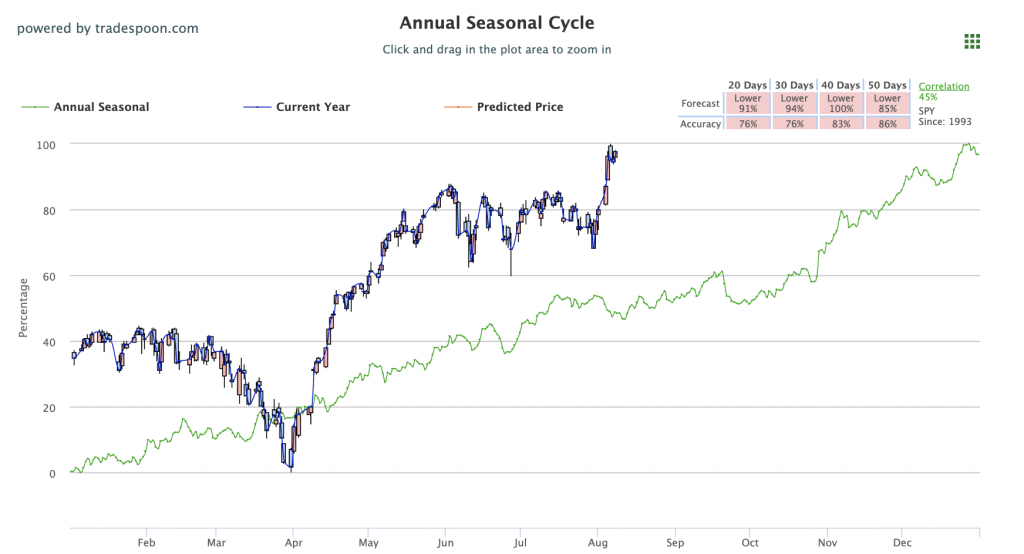
I remain in the MARKET BULLISH camp. My SPY $760-$780 target remains in play, with $700-$720 as important support.
If inflation moderates, oil stabilizes and earnings remain strong, the case for higher equity prices remains intact. If CPI and PPI surprise higher while crude continues climbing, higher-for-longer interest rates could quickly return to center stage.
With valuations elevated and little room for disappointment, this remains a market for patience, disciplined risk management and selective high-probability opportunities. The long-term trend remains intact, but this week’s inflation data should provide an important test of the rally’s durability.
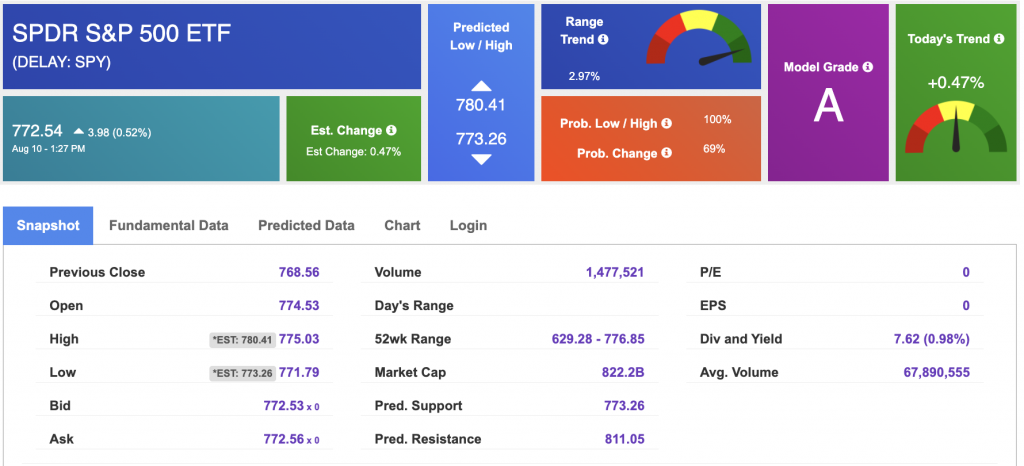
West Texas Intermediate for Crude Oil delivery (CL.1) is priced at $82.15 per barrel, up 5.10%, at the time of publication.
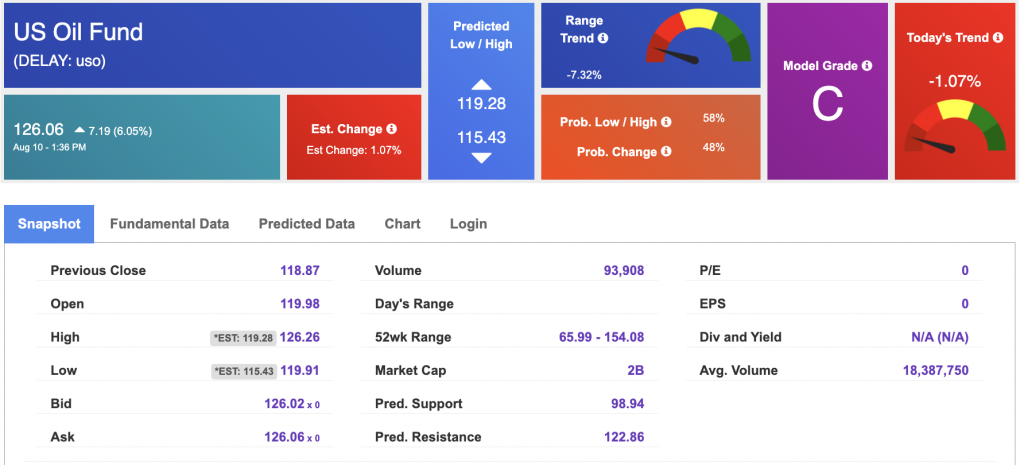
Looking at USO, a crude oil tracker, our 10-day prediction model shows mixed signals. The fund is trading at $126.06 at the time of publication. Prediction data is uploaded after the market close at 6 p.m., CST. Today’s data is based on market signals from the previous trading session.
The price for the Gold Continuous Contract (GC00) is up 0.94% at $4,441.30 at the time of publication.
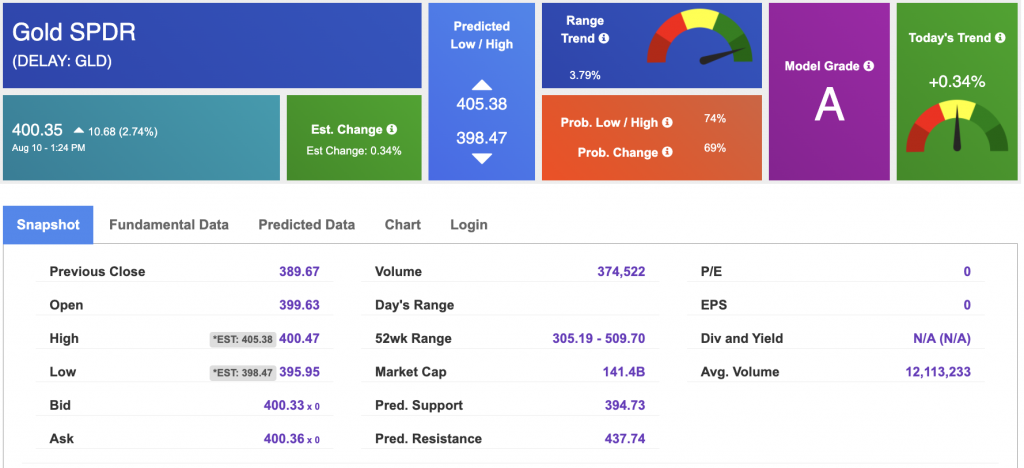
Using SPDR GOLD TRUST (GLD) as a tracker in our Stock Forecast Tool, the 10-day prediction window shows mixed signals. The gold proxy is trading at $400.35 at the time of publication. Vector signals show +0.34% for today. Prediction data is uploaded after the market close at 6 p.m., CST. Today’s data is based on market signals from the previous trading session.
The yield on the 10-year Treasury note is up at 4.702% at the time of publication.
The yield on the 30-year Treasury note is up at 5.246% at the time of publication.
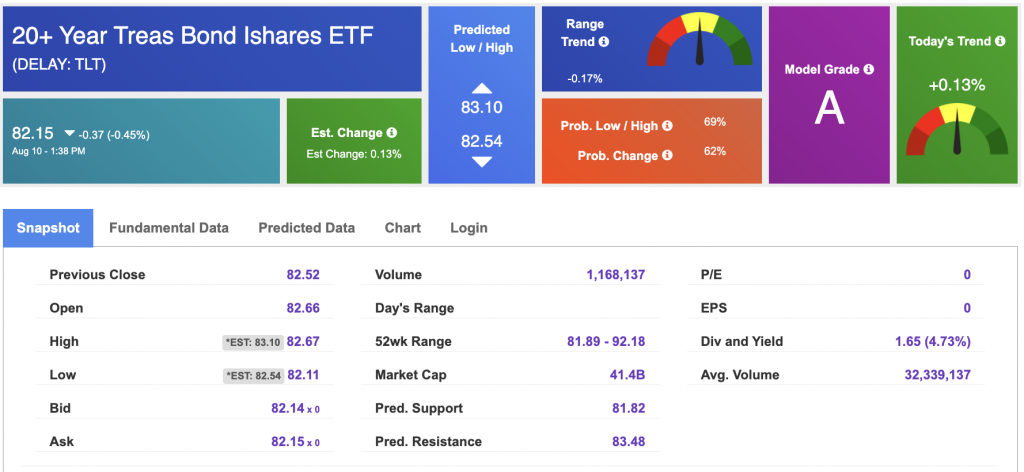
Using the iShares 20+ Year Treasury Bond ETF (TLT) as a proxy for bond prices in our Stock Forecast Tool, we see mixed signals in our 10-day prediction window. Prediction data is uploaded after the market close at 6 p.m., CST. Today’s data is based on market signals from the previous trading session.
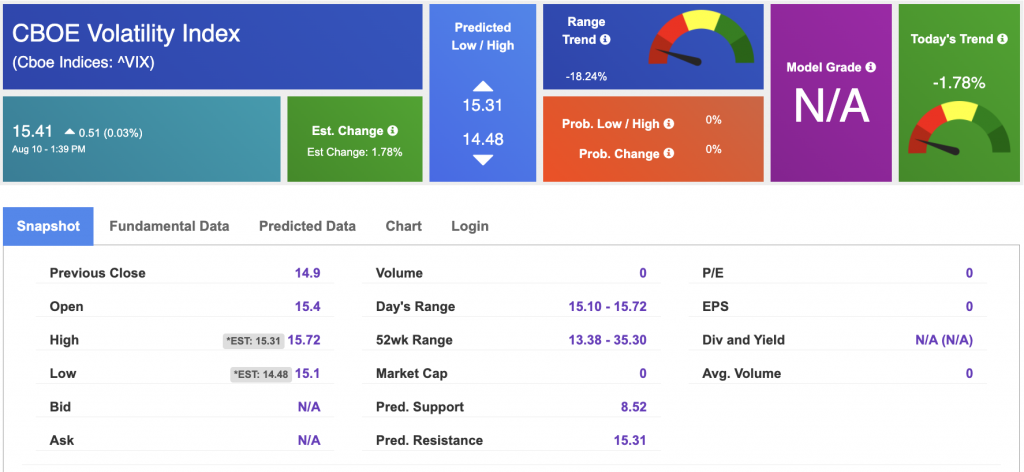
The CBOE Volatility Index (^VIX) is priced at $15.41 at the time of publication, and our 10-day prediction window shows mixed signals. Prediction data is uploaded after the market close at 6 p.m., CST. Today’s data is based on market signals from the previous trading session.
Please share this Tradespoon Market Commentary with your friends.



Comments Off on


Tradespoon Tools make finding winning trades in minute as easy as 1-2-3.
Our simple 3 step approach has resulted in an average return of almost 20% per trade!