 Sign Up for One-on-One Coaching and get our Premium Membership FREE for 1 Year!
CLICK HERE TO APPLY
Sign Up for One-on-One Coaching and get our Premium Membership FREE for 1 Year!
CLICK HERE TO APPLY
A collapse in oil prices, renewed U.S.–Iran negotiations, and a powerful AI-led rebound sent stocks soaring—but this week’s jobs report and blockbuster earnings could determine whether the rally has staying power.
Markets began the new week with a strong rebound as investors shifted back toward a risk-on mindset. The Dow Jones Industrial Average gained 1.1%, the S&P 500 advanced 1.2%, and the Nasdaq led the way with a nearly 1.9% rally. The biggest driver was a sharp improvement in geopolitical sentiment after President Trump confirmed new negotiations with Iran aimed at reopening the Strait of Hormuz, easing fears of a prolonged disruption to global energy supplies. The resulting decline in oil prices helped lower Treasury yields, reigniting leadership from growth stocks and artificial intelligence while providing a tailwind for travel, consumer discretionary and other interest-rate-sensitive sectors.
The dramatic reversal in energy markets marked a significant shift from last week’s environment. Crude oil fell roughly 6% after spending much of the previous week above $100 per barrel on supply concerns. As inflation expectations eased alongside lower energy prices, Treasury yields moved lower, giving investors greater confidence to rotate back into higher-growth technology names. While the geopolitical situation remains fluid, Monday’s price action was a reminder that global headlines continue to drive cross-asset moves, with oil, bonds and equities remaining tightly connected.
Technology once again reclaimed market leadership. Amazon surged more than 5% to surpass a $3 trillion market capitalization, reinforcing optimism surrounding cloud computing and artificial intelligence. Alphabet climbed nearly 5%, while Meta rebounded almost 7% after last week’s weakness as investors stepped back into several of the year’s largest AI beneficiaries. AI infrastructure companies also experienced another wave of buying, with Nebius and CoreWeave both posting double-digit gains, suggesting investor enthusiasm for long-term AI spending remains firmly intact despite recent volatility.
Outside of technology, Boeing rallied more than 5% after receiving FAA certification for the long-delayed 737 Max 7, providing another example of investors rewarding company-specific catalysts alongside improving macro conditions. Meanwhile, lower oil prices supported airlines, cruise operators and consumer-focused businesses that benefit from easing fuel costs and improved spending expectations.
Despite Monday’s strong rally, the broader macro picture remains balanced rather than one-sided. Last week’s Federal Reserve meeting left interest rates unchanged for a fifth consecutive meeting, but three policymakers dissented in favor of another rate increase, highlighting that inflation concerns have not disappeared. At the same time, global central banks remain cautious after the Federal Reserve, Bank of England and Bank of Japan all held policy steady while maintaining relatively hawkish guidance. Slowing Chinese manufacturing and services activity has also increased expectations for additional stimulus measures, creating another important variable for global markets over the coming months.
This week’s economic calendar has the potential to reshape expectations for monetary policy. Investors will closely monitor JOLTS Job Openings, ISM manufacturing and services surveys, weekly jobless claims and, most importantly, Friday’s Nonfarm Payrolls report. Any signs that the labor market is cooling could strengthen the case for eventual rate cuts, while another exceptionally strong employment report could reinforce the view that interest rates may remain elevated longer than many investors expect.
Earnings season also enters another important stretch. Palantir reports after today’s close, followed by closely watched results from AMD, McDonald’s, Disney, SanDisk and Western Digital later in the week. However, perhaps the most anticipated report will come from newly public SpaceX, whose first quarterly earnings release could become a major sentiment driver for both the aerospace industry and the broader technology sector.
I remain firmly in the MARKET BULLISH camp. Last week’s biggest risk was that elevated oil prices would keep inflation pressures alive and force interest rates to remain higher for longer. Monday’s sharp decline in crude has eased some of that concern, but the outlook will ultimately depend on whether geopolitical tensions continue to improve and whether upcoming economic data supports a gradual moderation in inflation without significantly weakening growth.
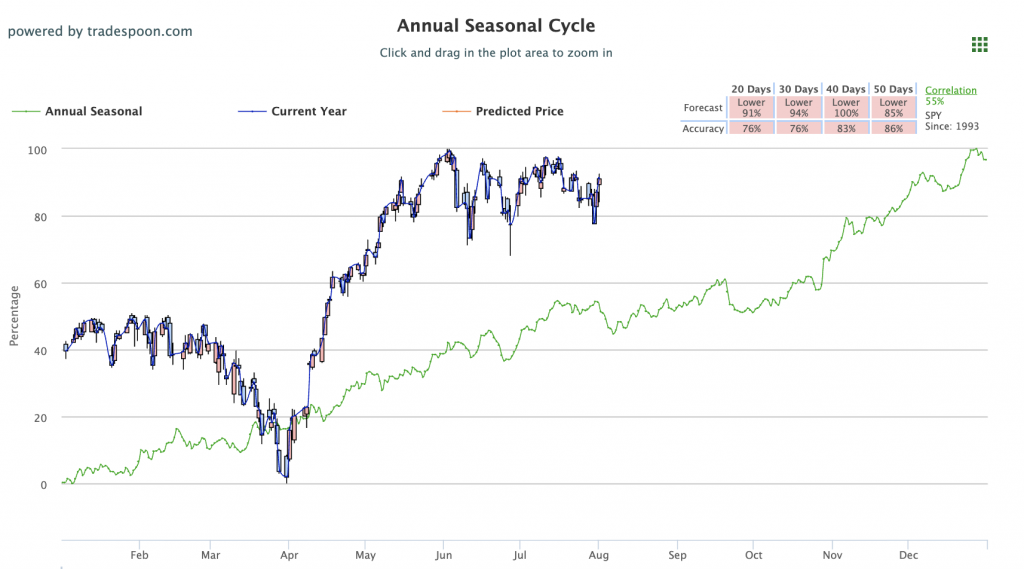
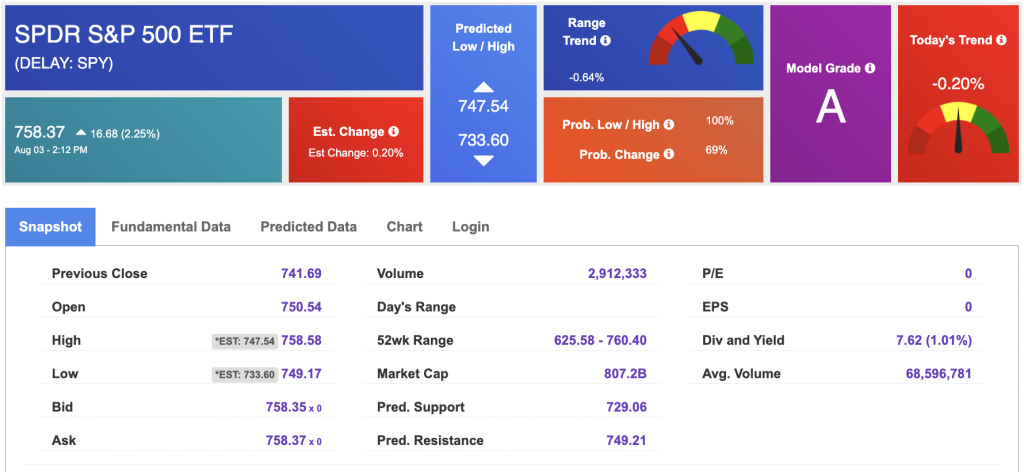
I continue to believe SPY has the potential to rally toward the $760–780 range over the next several months, while the $700–720 area remains important technical support. With earnings, economic reports, and geopolitical headlines all capable of shifting sentiment quickly, maintaining disciplined risk management while remaining focused on the long-term trend continues to be the most prudent approach.
West Texas Intermediate for Crude Oil delivery (CL.1) is priced at $80.11 per barrel, down 5.38%, at the time of publication.
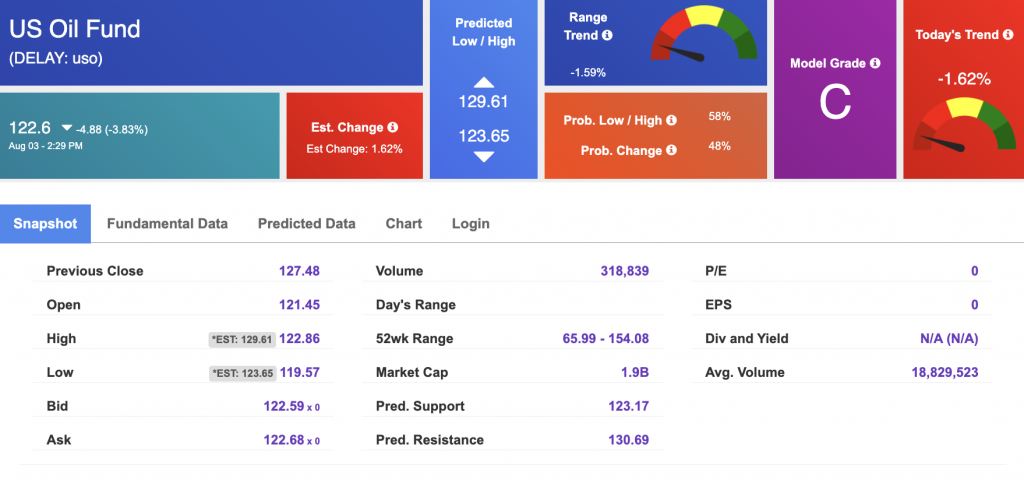
Looking at USO, a crude oil tracker, our 10-day prediction model shows mixed signals. The fund is trading at $122.6 at the time of publication. Prediction data is uploaded after the market close at 6 p.m., CST. Today’s data is based on market signals from the previous trading session.
The price for the Gold Continuous Contract (GC00) is up 0.01% at $4,107.30 at the time of publication.
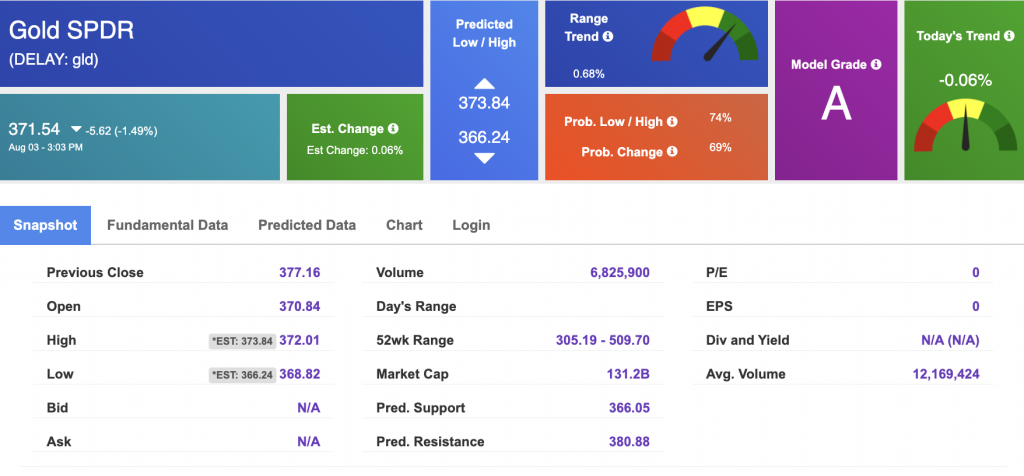
Using SPDR GOLD TRUST (GLD) as a tracker in our Stock Forecast Tool, the 10-day prediction window shows mixed signals. The gold proxy is trading at $371.54 at the time of publication. Vector signals show +0.06% for today. Prediction data is uploaded after the market close at 6 p.m., CST. Today’s data is based on market signals from the previous trading session.
The yield on the 10-year Treasury note is down at 4.691% at the time of publication.
The yield on the 30-year Treasury note is down at 5.235% at the time of publication.
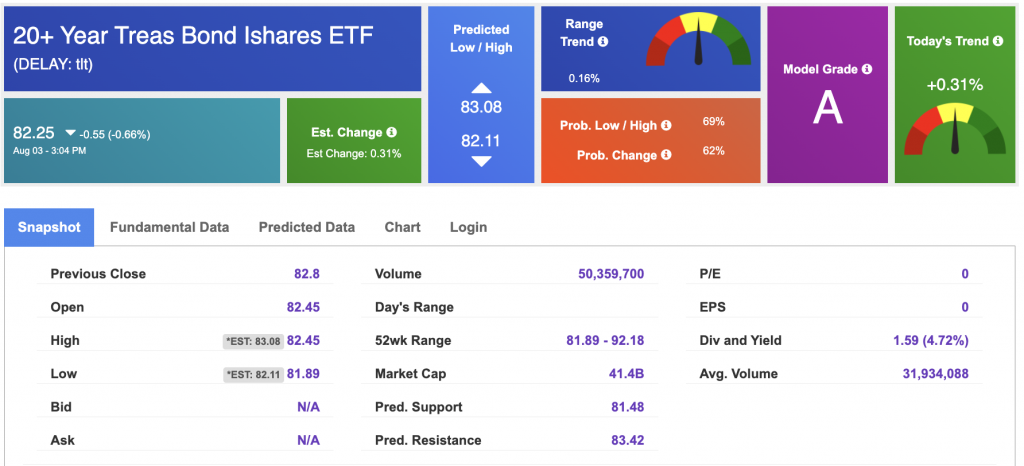
Using the iShares 20+ Year Treasury Bond ETF (TLT) as a proxy for bond prices in our Stock Forecast Tool, we see mixed signals in our 10-day prediction window. Prediction data is uploaded after the market close at 6 p.m., CST. Today’s data is based on market signals from the previous trading session.
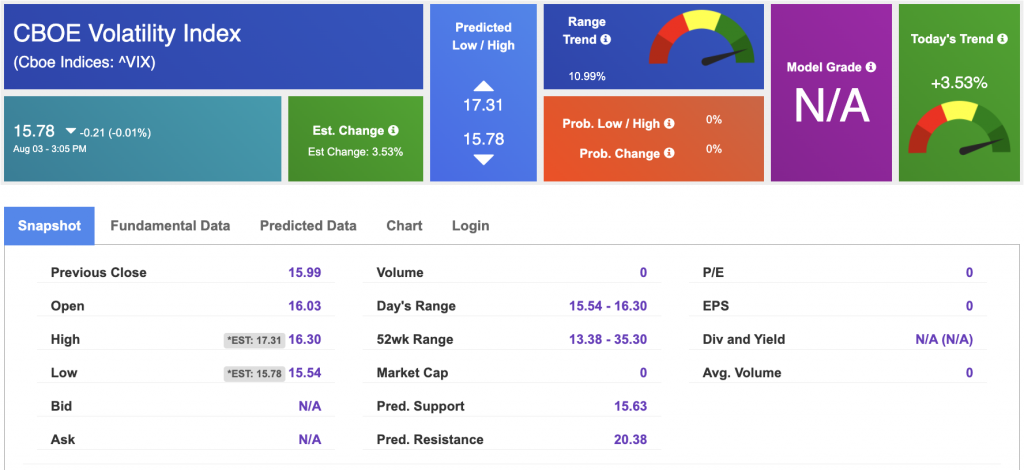
The CBOE Volatility Index (^VIX) is priced at $15.78 at the time of publication, and our 10-day prediction window shows mixed signals. Prediction data is uploaded after the market close at 6 p.m., CST. Today’s data is based on market signals from the previous trading session.
Please share this Tradespoon Market Commentary with your friends.



Comments Off on


Tradespoon Tools make finding winning trades in minute as easy as 1-2-3.
Our simple 3 step approach has resulted in an average return of almost 20% per trade!