 Sign Up for One-on-One Coaching and get our Premium Membership FREE for 1 Year!
CLICK HERE TO APPLY
Sign Up for One-on-One Coaching and get our Premium Membership FREE for 1 Year!
CLICK HERE TO APPLY
RoboStreet – Markets remain near record highs as easing Middle East tensions, resilient corporate earnings and cooling inflation support the rally, while Friday’s jobs report could determine whether the Federal Reserve stays on its higher-for-longer path.
The stock market continued its impressive summer advance this week as investors balanced encouraging geopolitical developments, another strong round of corporate earnings, and a fresh wave of economic data. While pockets of volatility emerged within the technology sector following several closely watched AI-related earnings reports, the broader market remained remarkably resilient. The S&P 500 and Dow Jones Industrial Average traded near record highs, volatility continued to drift lower, and investor sentiment remained constructive despite ongoing uncertainty surrounding Federal Reserve policy, inflation and global geopolitical risks.
And remember, we’re not talking about day trading here. I’m looking for 50-100% gains within the next 3 months, so my weekly updates are timely enough for you to act.
Markets continue to navigate several powerful macro themes simultaneously. The Federal Reserve remains committed to returning inflation to its long-term target, geopolitical tensions in the Middle East continue to influence energy prices, tariffs remain a source of uncertainty for global trade, and second-quarter earnings have once again demonstrated the underlying strength of corporate America. Together, these forces have created a market that remains bullish overall but increasingly selective beneath the surface.
The encouraging news is that the long-term uptrend remains firmly intact. The VIX has declined to approximately 15, reflecting relatively low levels of investor fear even as headlines continue to shift daily. Historically, markets trading near all-time highs with subdued volatility often indicate that investors expect economic growth and corporate profits to remain supportive, although periods of complacency can also increase sensitivity to unexpected news.
The most significant catalyst this week came from renewed diplomatic progress involving the United States, Iran, Oman and Qatar. Reports suggesting negotiations to reopen the Strait of Hormuz significantly reduced fears that one of the world’s most important energy shipping routes could remain disrupted. President Trump’s comments supporting ongoing negotiations helped reinforce investor optimism, sending crude oil sharply lower early in the week before prices stabilized later as additional geopolitical headlines emerged.
The decline in oil prices had important ripple effects throughout the financial markets. Lower energy prices helped ease inflation concerns, reduced upward pressure on Treasury yields, and lowered expectations that the Federal Reserve would need to tighten monetary policy further in the near term. Those developments fueled a broad risk-on rally, allowing both the Dow Jones Industrial Average and the S&P 500 to reach fresh record highs while cyclical sectors such as consumer discretionary, financials and industrials attracted renewed buying interest.
Although oil rebounded modestly later in the week as traders continued monitoring developments in the Middle East, energy markets remain one of the most important macro variables for investors. Any meaningful progress toward a lasting diplomatic agreement could continue reducing inflation pressures, while renewed conflict or additional shipping disruptions could quickly reverse that trend and place upward pressure on both crude oil prices and interest rates.
Corporate earnings also continued providing a strong foundation for the market. Approximately 86% of S&P 500 companies reporting second-quarter results have exceeded Wall Street earnings expectations, one of the strongest earnings seasons in several years. Aggregate earnings growth has remained healthy across multiple sectors, reinforcing confidence that the U.S. economy continues to perform well despite higher borrowing costs and a slowing labor market.
Several companies stood out with particularly impressive reports. Amazon surpassed a $3 trillion market capitalization, reflecting continued strength across its cloud computing and AI businesses. Caterpillar and Palantir both raised guidance as demand related to artificial intelligence infrastructure and data-center investment remained robust. Eli Lilly delivered another exceptional quarter while raising its full-year revenue outlook, helping lead the healthcare sector higher. Disney, Amgen and Booking Holdings also contributed to the market’s strength with better-than-expected financial results.
At the same time, earnings season also reminded investors that expectations surrounding artificial intelligence remain extraordinarily high. Companies are no longer rewarded simply for delivering strong results—they must significantly exceed already lofty expectations while providing optimistic guidance for future growth.
AMD reported impressive data-center revenue growth and exceeded earnings estimates, but cautious forward guidance and flat gross margins disappointed investors hoping for even stronger AI momentum, sending shares lower. Newly public SpaceX reported nearly doubled revenue and improving profitability, but its announcement of significantly higher-than-expected capital expenditures tied to AI infrastructure raised concerns about future cash flow, leading to a sharp decline in the stock. Other software and infrastructure companies, including AppLovin, Datadog, Western Digital and Sandisk, also experienced profit-taking despite reporting generally solid results, illustrating how demanding the market has become toward high-growth technology companies.
Economic data released this week painted a more balanced picture of the U.S. economy. ADP private payrolls increased by just 44,000 jobs, well below expectations, suggesting hiring activity continues to moderate. Meanwhile, the ISM Services PMI softened from prior readings but remained comfortably in expansion territory, indicating that the services sector continues to grow even as the pace of economic activity gradually slows. Weekly jobless claims remained relatively stable, reinforcing the view that the labor market is cooling in an orderly fashion rather than deteriorating rapidly.
Treasury yields continue to reflect this balancing act. The 10-year Treasury yield has remained volatile, trading within a broad range between roughly 4.00% and 4.80% as investors weigh slowing economic growth against persistent inflation risks. Every meaningful move in yields continues to influence sector leadership, with technology stocks generally benefiting from lower yields while financials and value-oriented sectors often perform better when yields move higher.
Looking ahead, Friday’s July nonfarm payrolls report represents the week’s most important economic catalyst. Investors will closely analyze both headline job creation and wage growth for additional clues regarding the health of the labor market and the Federal Reserve’s next policy decision. A stronger-than-expected employment report could reinforce expectations that interest rates remain elevated for longer, while weaker data could increase optimism that inflation is continuing to moderate and eventually provide the Fed with greater flexibility. Either outcome has the potential to influence Treasury yields, sector rotation and overall market direction heading into next week.
Despite the crosscurrents created by geopolitics, inflation, Federal Reserve policy and earnings season, I remain firmly in the MARKET BULLISH camp. The long-term trend continues to favor higher prices, supported by resilient corporate earnings, improving investor sentiment and an economy that continues to expand despite higher interest rates. While volatility should be expected as markets digest incoming economic data and geopolitical headlines, I continue to believe the SPY has the potential to rally toward the $760-$780 area over the next several months.
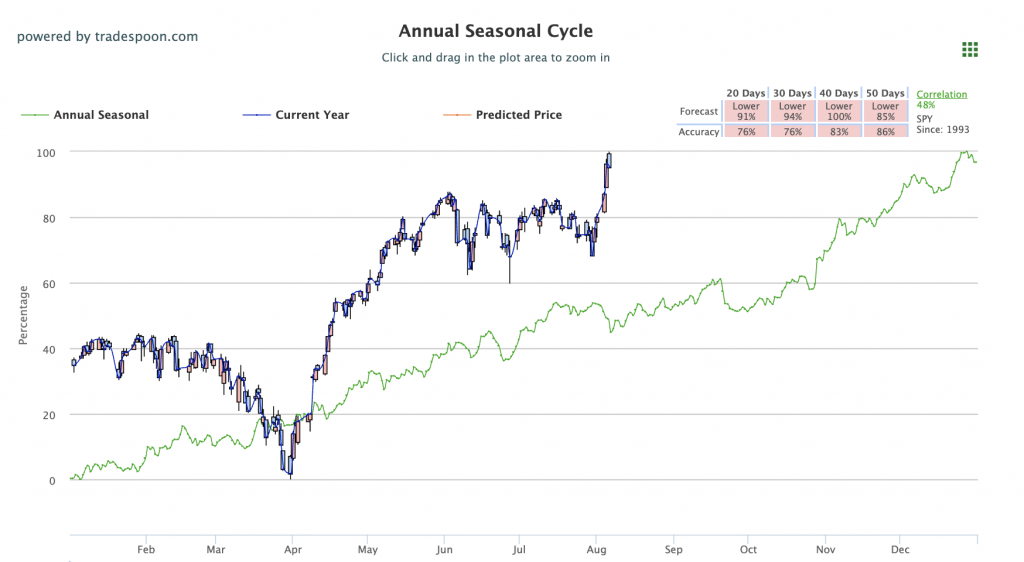
The primary risk remains unchanged: interest rates could stay higher for longer if inflation proves more persistent or energy prices begin climbing again. As always, disciplined risk management remains essential. In the near term, I continue to view the $700-$720 area on SPY as important technical support while favoring fundamentally strong companies with improving earnings, positive relative strength, and favorable long-term trends.
And that is exactly where RoboInvestor proves its value. Built for a headline-sensitive, range-bound market, our flagship AI-driven advisory helps cut through Fed uncertainty, tariff chatter, geopolitical risk, and AI hype to focus on what matters most: statistically grounded setups and clear risk-reward opportunities. With RoboInvestor, investors can stay engaged, stay disciplined, and act with precision instead of reacting emotionally to every headline.
Every other weekend, you’ll receive the RoboInvestor newsletter—a concise, high-signal read with market context, technical outlooks, updates on open positions, and clear, actionable trade ideas so you’re prepared and confident heading into Monday’s open.
Explore our latest forecasts, trade signals, and live strategy sessions at Tradespoon.com. Navigate uncertainty with confidence—and position yourself ahead of the curve.
Whether you’re targeting blue-chip stocks, ETFs, commodities, or inverse ETFs, RoboInvestor offers a flexible, forward-looking approach tailored to today’s market conditions. Our model portfolio typically holds 12 to 25 carefully selected positions, and we’ve recently adopted an even more selective strategy—focused on quality, resilience, and opportunity.
Join us and take advantage of advanced AI technology to guide your investments with precision and confidence.
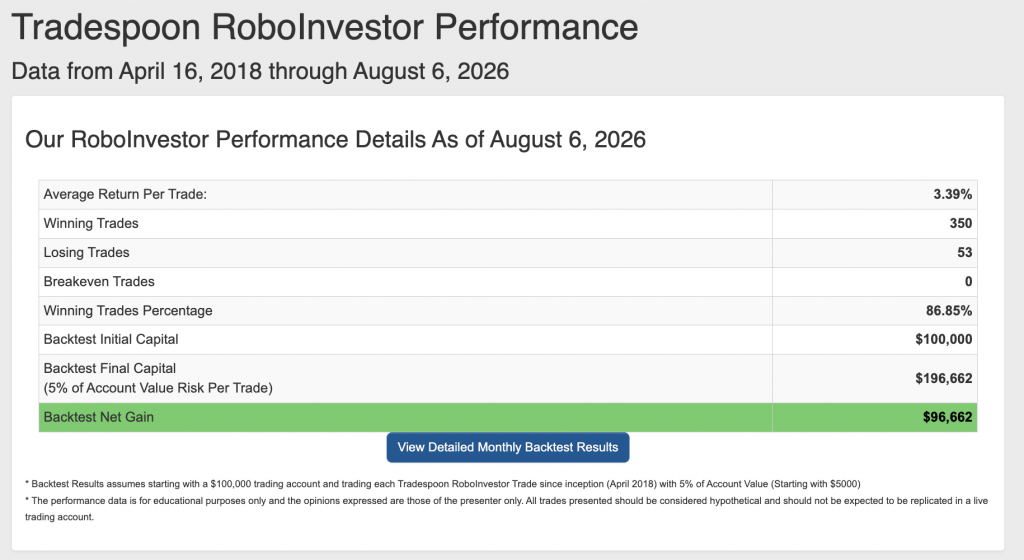
Our track record is one of the best in the retail advisory industry, with a Winning Trades Percentage of 86.85% since April 2018.
In this environment, a disciplined, insight-driven framework matters more than ever—one that cuts through the noise, respects the bond market’s influence, manages rate and employment risk, and helps you position proactively for the opportunities and pivots that tend to define the first quarter.
As we move through the second half of 2026, investors continue navigating a market that appears calm on the surface but remains highly sensitive beneath it. Geopolitical developments in the Middle East, shifting tariff policy, and an uncertain Federal Reserve path continue to influence investor sentiment as inflation gradually cools, but interest rates remain elevated. Meanwhile, economic data has become more mixed, with the labor market showing signs of moderation while corporate earnings continue to demonstrate remarkable resilience. Although volatility has remained relatively subdued, markets have reacted quickly to major macro headlines, making earnings, economic reports, and policy developments the primary drivers of short-term market direction.
Whether you are a seasoned investor or just starting, our team is here to help you every step of the way. Don’t face the challenges of tomorrow alone–join RoboInvestor today and take your investing to the next level.
Stay alert, stay strategic—and trade smart.
And remember, we’re not talking about day trading here. I’m looking for 50-100% gains within the next 3 months, so my weekly updates are timely enough for you to act.
*Please note: RoboStreet is part of your free subscription service. It is not included in any paid Tradespoon subscription service. Vlad Karpel only trades his own personal money for paid subscription services. If you are a paid subscriber, please review your Premium Member Picks, ActiveTrader, MonthlyTrader, or RoboInvestor recommendations. If you are interested in receiving Vlad’s personal picks, please click here.
Please share this Tradespoon Market Commentary with your friends.



Comments Off on


Tradespoon Tools make finding winning trades in minute as easy as 1-2-3.
Our simple 3 step approach has resulted in an average return of almost 20% per trade!