 Special Offer: Try the 'Elite Trading Circle Membership' for ONLY $37!
CLICK HERE TO LEARN MORE
Markets are starting the week with renewed momentum as softer labor data ease fears of another immediate Fed rate hike and AI leadership continues to support equities. But with Treasury yields still near multi-decade highs and geopolitical risks lingering, investors should expect volatility to remain elevated.
Markets are beginning the week with renewed momentum as investors continue to balance strong artificial-intelligence growth and corporate earnings against elevated interest rates, inflation concerns, and geopolitical uncertainty.
The biggest development since the end of last week has been a shift in Federal Reserve expectations.
September employment data showed considerably slower hiring, helping reduce fears that the Fed will immediately follow its September rate increase with another move in October. The Fed recently raised its target range by 25 basis points to 3.75%–4.00%, but markets are now assigning much lower odds to another increase at the October meeting.
That has provided some relief for equities, particularly technology stocks. The Nasdaq reached another record Monday as Nvidia, Microsoft, and other large growth companies helped lead the market higher.
The bond market, however, remains the biggest risk.
The 10-year Treasury yield recently reached roughly 5.34%, its highest level since 2002. Although weaker employment data have helped stabilize expectations somewhat, yields remain historically elevated and the broader 4.5%–5.5% range continues to be important.
When investors can earn more than 5% on government debt, equities face a significantly higher valuation hurdle. Any renewed surge in yields could quickly pressure technology, housing, utilities, consumer discretionary stocks, and other rate-sensitive areas.
Energy has offered some short-term relief. Brent crude had recently moved above $100 as the Iran conflict and disruptions throughout the Middle East raised concerns about global supply. Oil has since pulled back as exports from the region improved and additional supply reached the market.
That is encouraging for inflation, but geopolitical risk remains elevated. Oil prices near or above $100 remain an important threat because higher energy costs can quickly feed back into consumer prices and complicate the Fed’s efforts to control inflation.
The fundamental counterweight remains artificial intelligence.
AI infrastructure spending continues to generate strong growth across semiconductors, cloud computing, software, and data centers. Expectations for the upcoming earnings season remain strong, and investors will be watching closely to determine whether earnings growth can continue to justify elevated market valuations.
This creates the same divergence we discussed last week: strong technology and AI fundamentals are supporting the major indexes while higher rates and energy costs continue to challenge more economically sensitive parts of the market.
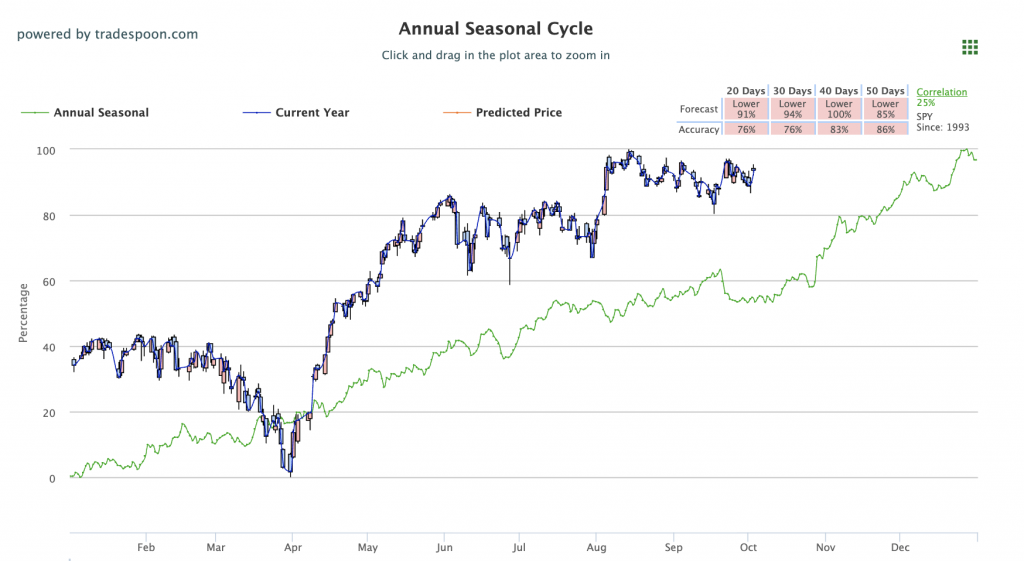
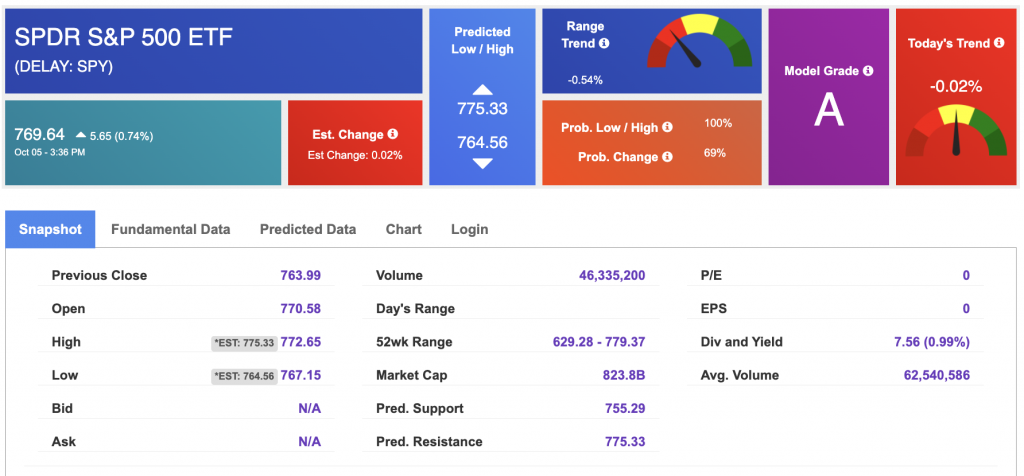
I remain in the MARKET BULLISH camp. The long-term trend remains intact, and I continue to believe SPY can ultimately move toward the 780–810 range over the next few months.
Near-term support remains around 740–750. As long as SPY continues to hold that region, I view pullbacks as part of the broader bullish structure rather than evidence that the longer-term trend has changed.
The primary risk also remains unchanged: interest rates staying higher for longer.
If Treasury yields stabilize while oil continues to retreat, the combination of strong earnings and AI investment could provide another catalyst for equities. If yields begin accelerating toward the upper end of their recent range again, investors should expect renewed volatility and sector rotation.
For now, the bulls remain in control, but the bond market continues to hold the key.
Please share this Tradespoon Market Commentary with your friends.



Comments Off on


Tradespoon Tools make finding winning trades in minute as easy as 1-2-3.
Our simple 3 step approach has resulted in an average return of almost 20% per trade!